
Getting your soil test results back feels exciting. You hold numbers that reveal what is happening beneath your feet. But staring at those numbers can feel confusing if you do not know what they mean or how to use them.
DIY soil testing has made understanding soil health accessible to everyone. Instead of sending samples to distant laboratories and waiting weeks, people can now test their soil on-site and get immediate answers. This guide will help you understand those results and use them to improve your land.
Importance of Testing for Microbial Biomass
Many people make changes to their soil based on guesswork. They add fertilizers, compost, or other amendments, hoping for improvement. Traditional soil tests measure chemical properties like nitrogen, phosphorus, and pH levels through various methods. These numbers provide useful information but miss the biological side of soil health. Living organisms in the soil drive nutrient cycling, water retention, and plant health.
Microbial biomass encompasses all the living organisms in your soil sample. This includes bacteria, fungi, and other microscopic creatures. Think of it as counting the population in an underground city.
Higher microbial biomass numbers usually indicate more biological activity, which can translate to better plant growth, reduced need for fertilizers, and improved resistance to drought. Lower numbers suggest the soil needs help building its living community.
Understanding the Fungal to Bacterial Ratio
The second key measurement is the fungal to bacterial ratio. Soil contains both types of organisms, but different plants prefer different balances. This ratio helps determine what type of ecosystem exists underground.
Bacteria thrive in disturbed soil and support annual plants like vegetables, grains, and grasses. These organisms multiply quickly and break down fresh organic matter rapidly. Gardens and agricultural fields typically show higher bacterial populations.
Fungi prefer undisturbed environments and support perennial plants like trees, shrubs, and native grasses. Fungal networks extend through soil, connecting plants and moving nutrients over long distances. Forest soils naturally contain more fungi than bacteria.
How to Read Your Numbers In Soil Testing?
Real-time soil testing provides immediate data, but understanding context makes those numbers meaningful. The same soil can show different results depending on season, moisture, and recent weather conditions.
Spring and fall typically show higher microbial activity than summer or winter. Warm, moist conditions help microorganisms thrive. Extreme heat or cold slows their activity. Compare results from the same season to track true changes.
What Good Results Look Like In Soil Testing
Healthy agricultural soil typically shows microbial biomass levels above 600 micrograms per gram. Garden soil often shows even higher numbers because gardeners regularly add compost and organic matter and gardens can be managed more frequently due to their size. Really excellent soil can reach 1000 or higher. These numbers indicate strong biological activity supporting plant growth. However, this is largely dependent several factors including your climate, region, soil type and texture.
Conclusion
Soil microbial biomass testing provides powerful insights when interpreted correctly. These numbers reveal the health of the underground ecosystem supporting all plant growth. Understanding and acting on this information creates healthier, more productive land that requires fewer external inputs while producing better results.
Most people never think about the dirt beneath their feet. They see it as something that makes their shoes messy or their hands dirty. But soil is actually alive with billions of tiny creatures that keep our entire planet running.
Soil health = planet health is not just a catchy phrase. It represents a real connection between what happens underground and the air we breathe, the food we eat, and the water we drink.
What Do Soil Microbes Actually Do?
These tiny organisms perform jobs that keep our planet functioning. Without them, life as we know it would stop. Soil microorganisms break down dead plants and animals. They turn this material into nutrients that new plants can use. This recycling process has continued for millions of years.
They also help plants grow stronger. Some microbes form partnerships with plant roots. They bring water and nutrients to the plant. In return, the plant gives them sugars. This teamwork benefits both sides.
The Carbon Connection
Climate change worries many people today. Soil microbes play a huge role in this challenge. They help store carbon underground instead of letting it float into the atmosphere as carbon dioxide. Soil biology acts like a carbon sponge. When microbes are healthy and numerous, they lock carbon into the soil. This process removes greenhouse gases from the air naturally.
Damaged soil with low microbial biomass and activity cannot store carbon effectively. The carbon escapes back into the air, exacerbating climate issues. Protecting soil life helps fight climate change.
Why Soil Health Matters for Food?
Farmers face increasing pressure to grow more food for our growing population, while facing the need to use fewer chemicals and resources to have more sustainable growing practices. Plants growing in soil rich with microbes need less fertilizer. The microbes provide nutrients naturally and help soil hold water better, reducing the need for irrigation.
Living soil creates stronger plants that resist pests and diseases. This means farmers can use fewer pesticides and the food can become healthier, while the environment stays cleaner.
Testing Makes the Difference
You cannot improve what you cannot measure. This applies to soil health, too. Farmers and gardeners need ways to check if their soil management practices actually work.
Testing methods, such as the microBIOMETER®, measure soil microbial biomass directly. These types of tests show how much life exists in the soil. The microBIOMETER® also estimates the balance between different types of microbes. The fungal-to-bacterial ratio tells us about soil conditions. Different plants and ecosystems prefer different ratios. Vegetables like more bacteria, while trees prefer more fungi. Understanding these preferences helps growers manage their land better.
The Bigger Picture
When we improve soil health in one place, the benefits spread. Healthy soil reduces erosion, stores carbon, and supports both aboveground and belowground biodiversity.
Soil health = planet health because everything connects. The microbes in your garden affect the air quality in your neighborhood.
Soil looks simple. But a small clump contains an entire world teeming with life. Understanding microbial life in soil changes how people think about growing plants.
Microbial biomass carbon varies around a median of 206 micrograms per gram of soil.
The Invisible Workers Underground
Soil microorganisms, including bacteria, fungi, and archaea, drive essential soil functions such as nutrient cycling, organic matter decomposition, and disease suppression.
Bacteria often represent the most numerous group. They break down dead plant material and transform nutrients into forms plants can use. Some bacteria fix nitrogen from the air, turning it into fertilizer that plants need for growth.
Fungi contribute heavily to soil structure and the break down organic matter, significantly contributing to the conversion of carbon to stable organic matter. This makes fungi extremely efficient at building long-term soil health.
How Do Bacteria Help Plants Grow?
Bacteria do several important jobs in soil. As they decompose organic matter like leaf litter or dead roots, nutrients locked inside dead material are released and become available for plants to use.
Nitrogen-fixing bacteria work with plants in special partnerships. Bacteria like Rhizobium form symbiotic relationships that fix nitrogen, converting atmospheric nitrogen gas into usable ammonia that plants absorb through their roots. This free fertilizer helps plants grow strong without chemical additions.
Some bacteria dissolve minerals in soil. Bacteria such as Micrococcus, Enterobacter, and Pseudomonas play crucial roles in phosphorus solubilization, making phosphorus available for plant uptake. Plants need phosphorus for root development.
Understanding Fungi’s Critical Role
Fungi look different from bacteria; not only are they larger, but they have slightly different pigments. Fungal biomass is necessary for healthy soil—their size and structure give them special abilities.
Fungi break down tough plant materials like wood and tree bark. They produce special enzymes that dissolve lignin, the substance that makes wood hard. This decomposition creates rich, dark soil called humus that holds moisture and nutrients.
How Farming Practices Affect Soil Microbes
Fungi and bacteria keep each other in check through symbiotic relationships. Different plants prefer different ratios of fungi to bacteria. Annual crops may prefer lower fungal-to-bacteria ratios, while perennials prefer higher ratios. Forests have the highest ratios because trees depend heavily on fungal networks for nutrients.
According to a study by Lori et. al. in 2017, organic farming systems show 32 to 84 percent greater microbial biomass compared to conventional systems. Adding compost, manure, and cover crops feeds soil microbes and helps grow their populations.
Chemical fertilizers and pesticides harm soil microbial communities. Fungicides kill both harmful and helpful fungi. Without beneficial fungi, plants struggle to access nutrients and water. This forces farmers to add more chemicals, creating a cycle that damages soil health.
Understanding Soil as a Living System
Soil microbial biomass represents the foundation of productive agriculture and healthy gardens. When people protect and feed these microscopic workers, they foster plant-soil interactions and receive a stronger and healthier soil community.
Learning about soil microbes transforms how people garden and farm. Every decision—from whether to till, what to plant, and how to fertilize—affects billions of organisms working underground. Making choices that support microbial communities creates healthier soil, stronger plants, and better harvests that last for generations. Use the microBIOMETER® soil test to estimate your soil microbial biomass and ensure you have the healthiest soil possible.

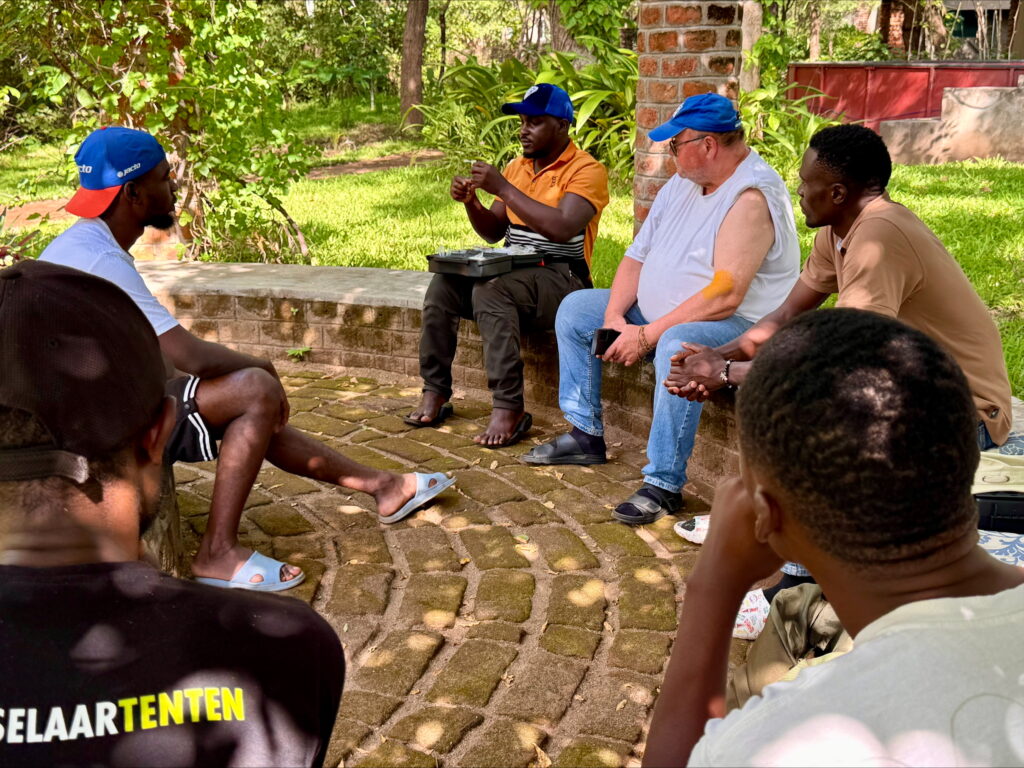
Fred Way has joined forces with APN – the Agroforestry Promotion Network which was founded by Roland Frutig and Lucky Mukasa. He also collaborates with soil stewards and farmers from Kenya, Malawi, Uganda, India and Switzerland.
The group travels throughout Africa to Uganda, Egypt, Nigeria, etc. They have educational centers in Malawi and Uganda. Here they host classes several times a year covering various soil practices to assist local growers by enhancing their farming techniques and improvimg forest function. By utilizing microBIOMETER® in these classes, they are able to highlight the importance of soil biology as well as demonstrate how changes in microbial biomass and fungal to bacterial ratio have positive effects on soil.
Whenever they can, they supply farmers with a microBIOMETER® test kit to allow them to easily test and track their soil’s health. While they are still in the beginning stages, their goal is to be able to provide local areas with kits since they are used to determine how native, natural forests function as well.
Fred performed microBIOMETER® testing in a logged forest that was a primary source for rubber in the late 1800’s until tthe early 1900’s. Currently, locals are removing all dead wood for fuel which is creating a loss of food at the trophic level. They use Indigenous microbial organisms (IMOs) in manure and urine (mostly from cows), molasses and other regenerative practices to stimulate the soil. They have discovered that by using these materials, they are able to kickstart the regenerative system. microBIOMETER® has demonstrated that these somewhat unconventional materials are increasing fungal levels over time while bare soil that previously wasn’t producing is now showing signs of life. Their goal is to emulate what’s happening in the forest for their agriculture food production system.
“The affordability and compatibility of microBIOMETER® as well as the real-time results make it easy to understand and track results over time and see improvements quickly. The addition of microBIOMETER® PRO’s advanced calculations and moisture adjustments are a good addition to the test,” – Fred Way
Recently, the Soil Association team was at Woodoaks Farm in Hertfordshire, England collecting soil samples as part of the AI 4 Soil Health project (AI4SH). Madeleine Silberberg, Project Coordinator, coordinates 13 pilot sites across the continent in partnership with leading European institutions.
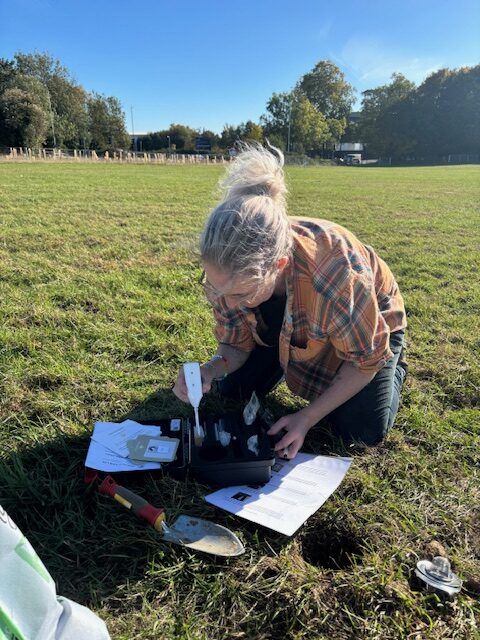
Recently, the Soil Association team was at Woodoaks Farm in Hertfordshire, England collecting soil samples as part of the AI 4 Soil Health project (AI4SH). Madeleine Silberberg, Project Coordinator, coordinates 13 pilot sites across the continent in partnership with leading European institutions. These sites, covering 11 pedoclimatic regions, were selected based on distinctive soil qualities. The team are using advanced measurement techniques, generating new insights into the health of Europe’s soils, testing the assumptions in their models, and helping determine the best monitoring tools for the future.
Soil Association Farming Advisor, Karen Fisher, shares her experience using microBIOMETER® on this project.
“microBIOMETER® turned out to be a genuinely exciting addition to the toolkit. The first test took me a little while, carefully following the instructions step by step, but once I got into the rhythm the process was surprisingly straightforward. The longest part was waiting for the sample to develop but that slotted in nicely while we collected bulk density samples and soils for lab analysis.
I did have a small hiccup with scanning the first card, but I think my app might have been on the wrong mode, but after that everything worked perfectly. Each scan felt a bit like opening a present. I found myself looking forward to seeing what the next result would show.
It was fascinating to see the different patterns emerging across woodland, permanent grassland, conservation fields and compost. Some results weren’t quite what you might expect, for example, a woodland showing a lower fungal: bacterial ratio than a long-term grass field. It is a reminder that context matters: soil biology reflects both current conditions and land use history, and sometimes regeneration takes time.
These kinds of rapid, field-based tools do not replace lab analysis, but they bring soil life into focus in a way that is both practical and accessible. Over time, repeating these tests across seasons and management practices will help us build a richer picture of soil health and feed into the development of different indicators.”
Senior Farming Advisor Josiah Judson, “‘It was great to be out in the field making sure the tools we’re developing actually make sense on the ground and can support different users. It’s an ambitious goal to map these things across so many different landscapes, but the more data we can get, the better!”
Remember when you needed expensive equipment just to know what’s happening in your soil? Well now that same device you use to scroll social media and read the news can analyze soil health with lab-quality precision.
The Science Behind Your Pocket Soil Lab
Your smartphone possesses something laboratories have relied on for decades: sophisticated optical sensors and powerful processing capabilities. Modern smartphones can detect color variations, light intensity, and chemical reactions through their cameras and built-in sensors. When paired with the right testing reagents and apps, these everyday devices transform into legitimate soil analysis tools.
The principle is surprisingly straightforward. Soil samples react with specific chemical reagents, producing color changes that correspond to different nutrient levels, pH values, or biological activity. Your phone’s camera captures these color variations, while specialized algorithms interpret the data and provide instant results.
What Your Mobile Soil Lab Can Actually Measure
You might wonder what kind of soil data you can realistically expect from smartphone-based testing. The capabilities are more extensive than you’d think:
Real-Time Results That Actually Matter
The game-changer isn’t just the technology—it’s the speed. Traditional soil testing means collecting samples, shipping them to a lab, and waiting days or weeks for results. And by then, growing conditions and microbial communities may have changed completely. Smartphone-based soil lab technology delivers results in minutes, not days. This real-time capability transforms how you can manage your soil health. And the microBIOMETER® can help you do just that.
Notice your tomatoes looking yellow in mid-July? Test the soil immediately and adjust your fertilization strategy that same afternoon. Planning fall amendments for your lawn in Texas? Test multiple spots across your property in a single morning and create a targeted improvement plan.
Getting Started: Your First Mobile Soil Analysis
Setting up your smartphone as a soil lab is simpler than you might expect. The microBIOMETER® includes testing reagents, measuring tools, and a smartphone app that guide you through the entire process step by step. You’ll collect a representative soil sample, mix it with the provided reagents, and use your smartphone’s camera to capture the resulting color changes. The app then analyzes the images and provides detailed reports about your soil’s condition. The testing process is quick and you can see results in 20 minutes.
The Technology Revolution Happening Now
All-in-one smartphone-based devices are becoming preferable for agricultural soil analysis, enabling users to complete self-assessments about soil quality and receive performance reports with actionable insights.
The implications extend far beyond individual gardeners. Extension services at universities across the United States are incorporating smartphone soil testing into their educational programs. Community gardens in both rural and urban areas are using these tools to optimize their growing strategies and share soil health data among members.
Urban gardening isn’t just about growing tomatoes in a small closet. It’s about understanding the complexity of soil microbes in unconventional spaces and utilizing new methods that make city gardening not only possible, but also incredibly rewarding.
Plants with healthy microbial communities in their root zones tend to grow more vigorously and are better equipped to withstand stressors such as drought, pests, and diseases. In urban environments where plants face challenges like air pollution, heat islands, and limited space, this microbial support system becomes even more crucial.
Urban soil faces unique challenges that rural farmland doesn’t necessarily encounter on a daily basis. You’re dealing with:
Start with Quality Organic Matter
Your soil microbes are essentially composting machines, but they need fuel. Add compost, aged manure, or leaf mold regularly. These organic materials provide the carbon and nutrients that feed your microbial community. In cities like Portland and Seattle, many neighborhoods now offer community composting programs—take advantage of them!
Test and Track Your Progress
Understanding your soil’s microbial health doesn’t have to be guesswork. Modern soil testing technology allows you to monitor microbial biomass and the fungal-to-bacterial ratio right from your balcony or rooftop garden. This data helps you understand whether your soil management practices are actually working.
Minimize Chemical Disruption
Synthetic pesticides and fertilizers can disrupt your carefully cultivated microbial community. Instead, focus on building soil biology through organic amendments and natural pest management strategies. Beneficial soil microbes perform fundamental functions such as nutrient cycling, breaking down crop residues, and stimulating plant growth.
A recent study reported by the NIH reveals an intriguing connection between gardening and human health that goes beyond fresh vegetables and exercise. It found that frequent exposure to environmental microbiota, especially through skin to soil contact, diversifies commensal microbiota, enhances immune modulation, and ultimately lowers the risk of immune-mediated diseases.
As more Americans embrace urban gardening & soil health practices, we’re seeing innovations that make microbial monitoring and management more accessible than ever. Whether you’re growing herbs on a fire escape in Brooklyn or maintaining raised beds in a Phoenix community garden, understanding and nurturing your soil’s microbial community will help you grow healthier plants while potentially benefiting your own well-being.