
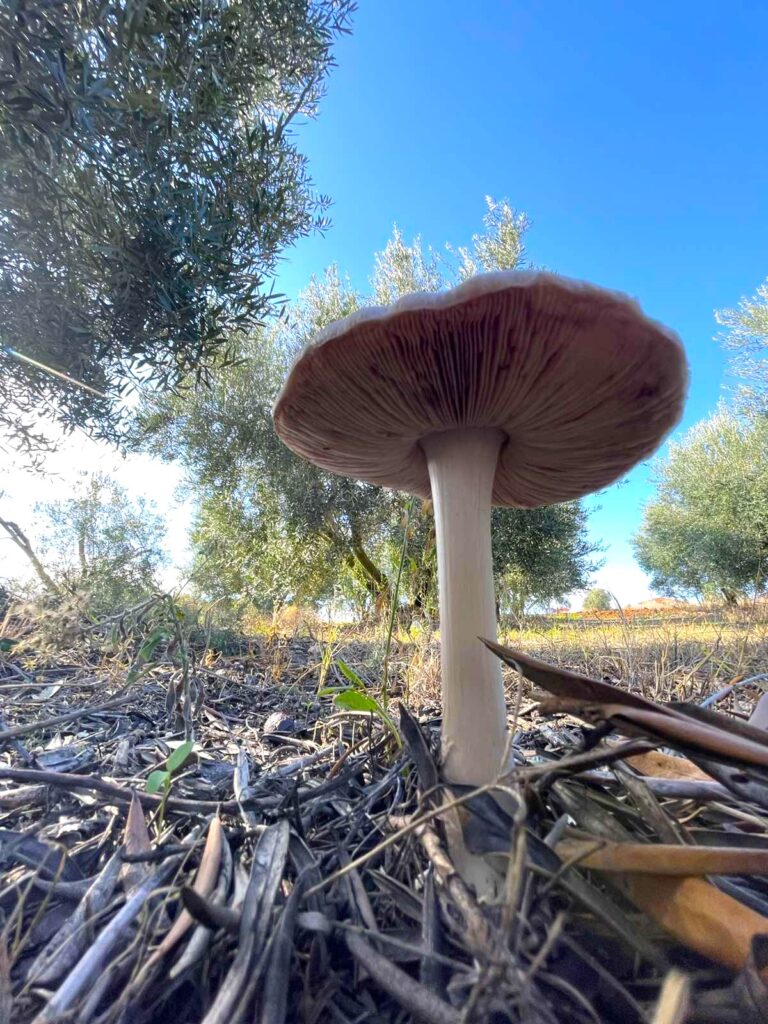
Dimitris Mameletzis is a physics educator and olive grower at Ελαιώνες Μαμελετζή (Mameletzis Olive Groves) in Greece. Dimitris’ project, Terra Vitalis, focuses on transitioning conventional olive groves into self-sustaining, regenerative ecosystems. The company specializes in high-phenolic olive oil (Halkidiki and Koroneiki varieties) by prioritizing soil health over chemical inputs.
Dimitris has been utilizing microBIOMETER® as a primary tool to scientifically validate their regenerative practices and monitor the impact of Effective Microorganisms (EM) inoculation in the soil and foliage. Their methods include organic mulching using shredded olive branches and local flora (like Taraxacum) and attapulgite soil amendments to enhance water retention in drought-stressed (dry-farmed) groves.
microBIOMETER® results have shown a significant increase in microbial biomass in their Terra Vitalis plots compared to conventional plots. This biological activity is directly linked to the exceptional health of their trees—visible, deep green foliage, zero fungal issues (Cycloconium), and high polyphenol counts (Oleocanthal) in their olive oil, which carries an EU Health Claim. Dimitris enjoys having the ability to monitor soil microbial biomass in real-time as they transition from conventional to chemical-free olive farming.
Dimitris will continue to use microBIOMETER® for on-site monitoring and comparative analysis between different olive groves. Specifically, comparing the microbial biomass in irrigated “transition” plots versus dry-farmed “Terra Vitalis” plots to monitor in real-time how soil biology responds to regenerative interventions.
“The main benefit of microBIOMETER® is the ability to quantify “soil health,” which was previously invisible. It helps us make data-driven decisions on where to apply more organic matter and provides tangible proof to our customers that our regenerative practices actually work. It has bridged the gap between theoretical physics/biology and practical field application. Interestingly, we found that even in dry-farmed (non-irrigated) groves, microbial activity remained resilient during heatwaves, As a physicist, I view this as a transition from a high-entropy, input-dependent system to a low-entropy, self-organizing biological engine.” – Dimitris Mameletzis
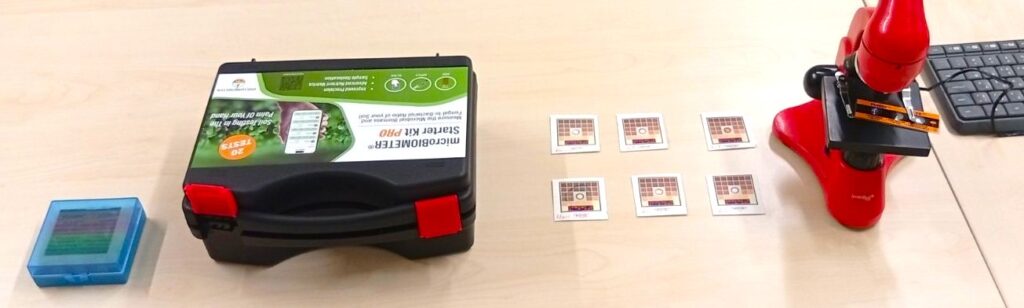
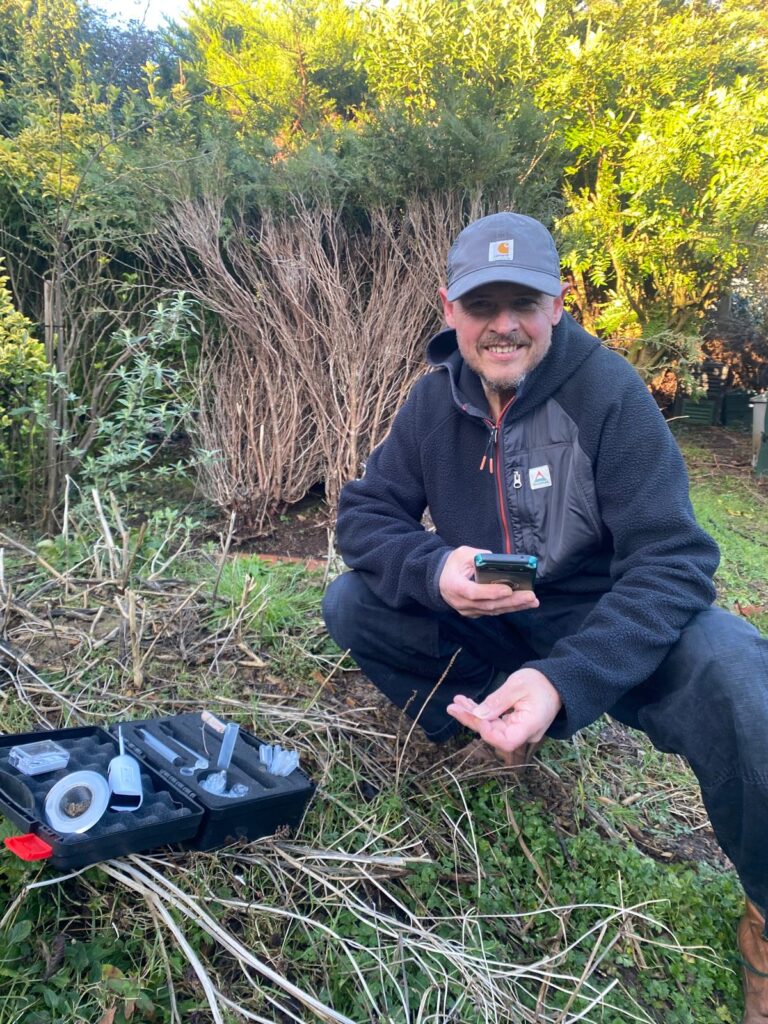
Regenerative agriculture is gaining momentum across the world, but momentum alone isn’t enough. Farmers, land managers, and policymakers are all asking the same question: where’s the evidence? That’s what drove us to build GeoDataTrack® – an offline-first mobile platform that makes rigorous ecological data collection accessible and affordable. Because the truth is simple: you can’t manage what you don’t measure, and you can’t prove regeneration without the data to back it up. That’s also why we’re so excited about our collaboration with microBIOMETER®.
The regenerative movement has a compelling story to tell, but stories need data. Whether a farmer or land manager is seeking ecological certification, applying for results-based payments, or demonstrating progress to stakeholders, they need a structured, repeatable way to capture what’s happening on their land. Most monitoring platforms are built for large corporates with price tags to match, leaving the land managers actually driving ecological change priced out entirely. GeoDataTrack® was built to close that gap.
Soil biology is the engine room of regeneration. You can measure ground cover, species diversity, and water infiltration all day long, but without understanding the microbial community beneath the surface, you’re only seeing half the picture. Our collaboration with microBIOMETER® is a natural fit because we share a core belief: practical, affordable tools belong in the hands of the people managing the land, not locked away in laboratories.
microBIOMETER® is field-ready, delivers results on-site, and doesn’t require expensive lab infrastructure. A land manager can take a soil sample, run a microBIOMETER® test, and log microbial biomass and fungal-to-bacterial ratios straight into the GeoDataTrack® offline capable app, alongside vegetation transects, photo monitoring points, and infiltration measurements. One visit, one platform, a complete ecological snapshot.
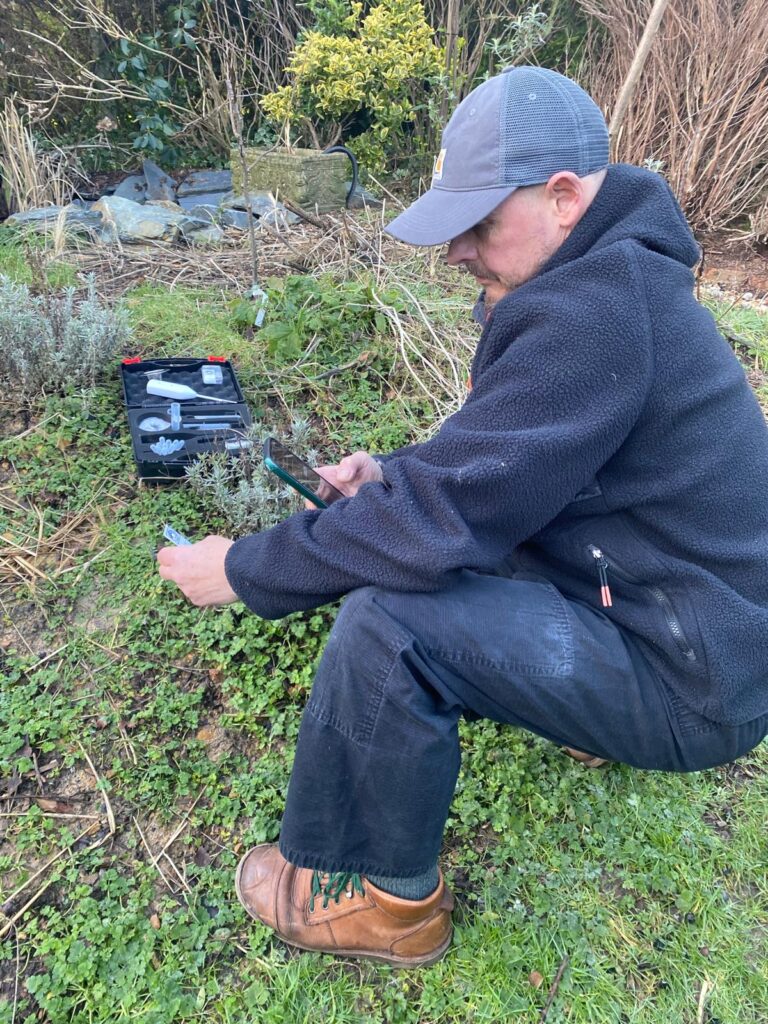
The real power of this collaboration lies in what the data reveals over seasons and years. When a farmer shifts to adaptive grazing or introduces diverse herbal leys, the ecological response builds gradually. GeoDataTrack® captures that trajectory – every observation time-stamped and geolocation-stamped – while microBIOMETER® adds the vital biological dimension. Rising microbial biomass and shifting fungal-to-bacterial ratios are signals that the soil is responding to improved management. Together, this becomes compelling evidence for certification bodies, grant funders, and government schemes that increasingly demand demonstrable ecological outcomes.
We believe the future of regenerative agriculture depends on putting measurement tools directly into the hands of the people managing the land – because when land managers can measure change, they can manage for it. microBIOMETER® shares that vision. Together, we’re going far.
About GeoDataTrack
GeoDataTrack® is an offline-first mobile platform for field data collection in regenerative agriculture and ecological verification, priced at $150 per property per annum. Aligned with the Savory Institute’s Ecological Outcome Verification protocol, GeoDataTrack® puts rigorous ecological monitoring tools directly into the hands of land managers worldwide. Learn more at geodatatrack.com.
Farmers across America are discovering something amazing beneath their feet. The secret to better crops and healthier land isn’t always found in a bottle or bag. It lives naturally in the soil, waiting to be awakened through smart and intentional farming practices. Soil microbial communities play a large role in soil metabolic activity and drive critical ecosystem services like decomposition and nutrient cycling.
Bacteria, fungi, and other microscopic creatures transform dead plant material into food that crops can use. Regenerative agriculture & microbes work together like partners in a successful business. When farmers treat soil as a living system rather than just dirt, these microorganisms multiply and strengthen.
How Traditional Farming Hurts Soil Life
Conventional farming methods can accidentally damage the very organisms that make soil productive and alive. Heavy tilling breaks apart fungal networks that connect plant roots. Chemical fertilizers flood the system with quick nutrients but starve the microbes that naturally produce those same nutrients.
Soil health drops when microbial diversity and abundance decreases. Farms become dependent on more chemicals to achieve the same results. It’s like trying to run a factory with fewer workers each year while expecting the same output.
Different microbes handle different jobs in the soil. Some break down tough plant materials. Others protect crop roots from diseases. Many form partnerships with plants, trading nutrients for sugars. This complexity creates a stable system that keeps working even when conditions change.
Healthy microbial communities also help crops handle stress better. During droughts, diverse soil life improves water retention. When diseases threaten, beneficial microbes compete with harmful ones, protecting plant roots naturally.
Farmers don’t need complicated systems to start improving their soil life. Cover crops provide food for microbes when cash crops aren’t growing. These plants keep living roots in the ground, which helps more microbes stay fed year-round instead of going dormant.
Crop rotation brings diversity that supports more types of beneficial organisms. Different plants feed different microbes, and varying root depths access nutrients from multiple soil layers. This natural variety strengthens the entire system.
The benefits of regenerative farming show up quickly in soil tests and gradually in farm economics. Crops access nutrients more efficiently when healthy microbial populations cycle them naturally. This means farmers are able to spend less on fertilizers while maintaining or improving yields.
Weed and pest pressure often decreases, too. A diverse microbial community supports beneficial insects and creates conditions where crops outcompete weeds naturally. This reduces herbicide needs and the labor involved in weed management.
Fungal to bacterial ratio serves as an important indicator of soil condition. Healthy agricultural soils need both types of microbes, but many farms have shifted too far toward bacteria-dominated systems. Restoring fungal populations helps lock carbon in the soil and improves overall stability, as fungi connect different plants and transport nutrients across distances that roots alone could never reach.
The science behind soil biology keeps advancing, giving farmers better tools and understanding. New microbial products target specific crop needs or soil conditions. Education and support networks help farmers adopt these methods successfully. Universities, extension services, and farmer groups share practical knowledge gained from real-world experience. This collective learning accelerates the regenerative movement.

The Paddock Project, a working market garden providing fresh, seasonal produce to locals and visitors in Mullumbimby, is currently in the process of converting to fully certified organic status, marking an exciting step forward in their commitment to regenerative agriculture. The Paddock is committed to enhancing farming practices using chemical free, syntropic farming principles to guarantee quality produce from their paddock to your plate.
While recently undertaking their very first organic audit—thanks to a generous Grow the Growers grant from Santos Organics—they had the opportunity to test their soil using microBIOMETER® which was recommended to them by their assessor. The microBIOMETER® test provided instant insight into the health of their soil. After seven years of regenerative farming practice, using syntropic “chop and drop” methods, planting trees, and adding natural nutrients, they were thrilled to learn that their soil showed exceptionally high levels of fungal and microbial activity. It was real, measurable proof that their soil stewardship was working and their efforts to nurture and care for the soil were paying off.
So far, the Paddock Project has used microBIOMETER® on their syntropic food forests, however, they are already planning their next round of testing. They hope to implement regular quarterly testing moving forward to track the health of their soil seasonally and adjust inputs accordingly to continue improving soil biodiversity and plant health.
They’re also proud to report that the amount of carbon sequestered in their soil is off the charts further reflecting the positive impact of their practices. Every decision they make is driven by a vision for a healthier, more resilient future.
“What stood out to us immediately was how easy it was to use microBIOMETER®—no need to send samples to a lab or wait weeks for results. In just minutes, we had clear, quantifiable data right from the paddock. The speed and simplicity of the test made it ideal for our busy, hands-on farm environment. microBIOMETER® is an empowering tool for any grower or land steward who wants to make decisions based on real-time soil biology—not guesswork. It’s also incredibly satisfying to see proof that what you’re doing is making a difference. For The Paddock team, microBIOMETER® has become more than just a testing tool—it’s a celebration of how far our soil has come.”
Please visit The Paddock Project on Instagram learn more about the work they are doing.
 Amanda Foxon-Hill, a chemist by trade, is working with Mid Lachlan Landcare in the region of NSW, Australia. Mid Lachlan Landcare is a community organization committed to the regeneration of land. Their work includes Regenerative Agriculture, Box Gum Woodland Conservation, Superb Parrot Habitat, Community Gardens, Education & more. Cowra is the main town in their Landcare region which consists of various soil profiles. It is rich in farming land with cropping and grazing.
Amanda designed and performed a soil research project funded by the BCT (Biodiversity Conservation Trust). She took soil samples from farms, conservations and public land across the region to map their soil microbiome. Her goal was to see if she could establish a ’normal’ or ’typical’ range of microbes for each type of landscape and soil.
Amanda looked at grazed vs ungrazed land, mono-cropping vs mixed pasture etc. but that was really secondary to the soil geology and microbe link as there was a short window to complete this round of tests and farm management decisions such as what crop to grow, for instance, requires testing over multiple time points.
As part of the project, Amanda trialed microBIOMETER®. Microbes are essential for soil fertility and almost all plants work cooperatively with microbes to access the nutrients they need to thrive. The relationship between plants and microbes is dynamic; changing with the season, how the land is managed, plant species and life-stage, climate and the soil structure and composition.
“Overall, we feel this project has successfully delivered insights into how the Mid Lachlan region’s soils microbiome functions with respect to landscape features and management decisions although it’s clear there’s still a lot more work to do. Also, after putting the microBIOMETER® through its paces we believe it’s a useful tool for those looking to gain a deeper understanding of their soil. Our advice would be to use the microBIOMETER® or similar microbiology assessment tool/ protocol alongside your existing soil testing tools, at regular intervals to monitor the effect management decisions have on the soil microbiota over time.”
 PADK is an NGO dedicated to building capacity in regenerative agriculture techniques and soil science research. Their main initiative and focus, the Tropical Agriculture Research and Training Station (TARTS), is in the small village of Ngotto, in the East Region of Cameroon. The company’s objectives are to:
• Produce highly biodynamic and performant soil amendments.
• Restart the microbial activity of tropical soils, increasing nutrient availability, and alleviating the pressures of chemical fertilizers and pesticides.
• Increase local small-holder farmers’ knowledge of soil ecology and provide them with tangible resources to improve and regenerate their farmland.
A variety of logistical factors impeded their workflow while utilizing microscopy in their labs. Sampling was infrequent and irregular, tracking the F: B progression was difficult, and correlating with climate data and environmental parameters was near impossible.
In early 2022, Founder, Mr. Edmond Nader, came across the microBIOMETER®. Since then, they have accelerated their R&D efforts, and their results have benefited from more consistent monitoring. The benefits they have discovered while using microBIOMETER®:
• Process samples, measure the F:B ratio, and record the results using the mobile app’s Data Capture functionality, in about 20 minutes. The data capture has been a very welcome surprise as its simple to follow the evolution of substrates tested with the database and share results.
• Correlate data from other experiments and compare against our microscopy results.
• Accurately track the shift from bacterial dominance (i.e. thermal phase) to fungal dominance in their composting efforts.
“The microBIOMETER® has been an invaluable tool. It has helped our organization to better document results and follow the evolution of our efforts. We have found results to be accurate against most of our microscopy verifications and we trust the results. We are eager to share our experience with this tool with others and promote its use in sub-Saharan Africa, tropical climates, and elsewhere. There are few useful field tests available, especially useful in such rural areas as we work, the microBIOMETER® has been a very welcome addition to our laboratory and field studies.”
Bright Endeavors Now (BEN) located in Tanzania, East Africa was started by Biology professor Dr. Regina Herbert, PhD and her husband, an Electrical Engineer, Ricardo R. Herbert, MUP, MBA.
The BEN program provides an environment where budding engineers, designers, scientists and doctors are introduced to concepts in the sciences, technology, engineering, art and math (STEAM), through engaging, developmentally-appropriate activities.
Here’s a story from our friends at Kiss the Ground about regenerative southwest wheat farmer Yadi Wang at Oatman Flats Ranch home of Regenerate AZ 2023. He is working on a seemingly impossible mission to transform a degraded oat farm into the first large-scale, regenerative farm in one of the hottest and driest climates in the country, Arizona.

[IMAGE: https://images.unsplash.com/photo-1615053835734-7752878e939e] Credit: Unsplash
Regulatory initiatives have developed carbon trading prospects to combat carbon emissions, providing specific industries with an “allowance” for each tonne of carbon dioxide they emit annually, known as carbon credits. This initial allocation of carbon credits can be free of charge, and businesses are presented with more opportunities to buy or sell carbon credits. Companies with reduced carbon emissions can sell their excess carbon credits to participants who have increased emissions— forming the carbon market.
A feature on global issues by Maryville University notes that emissions of greenhouse gases must be halved by 2030 to avoid a climate catastrophe. However, global economies representing 90% of all such emissions have yet to commit to cutting carbon outputs at sufficient rates to meet this goal. Through the formation of the carbon market, businesses and organizations may be more incentivized to cut down on carbon emissions through the use of carbon offsets. These voluntary schemes come from groups that already have active carbon reduction plans, aiding buyers to work toward carbon neutrality by reducing emissions elsewhere.
As more governments, businesses, and organizations join the carbon market, individuals and smaller organizations can find it difficult to purchase emission-reducing carbon credits. Furthermore, the voluntary carbon market often lacks transparency and quality control, so there is a greater need for more accountability to open up new markets. As shared in a review on blockchain solutions by One Earth, blockchain technology has become a means to improve the integrity and accessibility of carbon markets. Because it’s a publicly available record and a third-party intermediary is absent, it can avoid ambiguity over ownership and double counting emissions reductions while reducing administrative costs across the system.
These unique processes can streamline and accelerate the carbon market digitally, allowing organizations and individuals to meet their carbon footprint reduction goals much sooner. Furthermore, the global economy may become more efficient and effective in supporting climate action as funding is distributed more transparently.
Many are aware that agriculture, especially animal agriculture, greatly contributes to carbon emissions. However, the development of soil carbon capture systems and farming practices such as regenerative agriculture has significantly reduced agricultural emissions, even lowering existing carbon emission levels through soil carbon sequestration. Our post “How microBIOMETER® Changed the Farming Practice of a Syntropic Farmer” shares how regenerative agriculture is kept up sustainably: soil maintenance is regularly monitored through soil microbial count and the use of natural soil supplements, promoting soil development to capture carbon effectively. These methods prevent soil desertification and provide a great opportunity for farmers to turn climate-friendly agricultural practices into carbon credits.
Companies like NORI establish carbon markets in support of regenerative agricultural practices that perform as carbon removal solutions. A third-party validator measures land management practices and crop data to assess the impact of a farmer’s regenerative practices, providing credibility and transparency to how much carbon can be removed per contribution. Through the reliability of the blockchain system, the carbon market is sure to flourish, granting more people the freedom to make a positive environmental impact.
Written by Sophia Logan for microbiometer.com

Nature article reports that microbial biomass estimates by microBIOMETER® correlates with soil health and yield stability.
The microBIOMETER® soil test was used to report microbial biomass in a recent Nature publication*. Scientists Dr. Judith Fitzpatrick and Dr. Brady Trexler of microBIOMETER® collaborated with a University of Tennessee team headed by Dr. Amin Nouri. The team evaluated the effects on soil health and yield stability of 39 different methods of raising cotton over 29 years. The conditions tested included till, no-till, various cover crops and different levels of nitrogen fertilization.
The study found that the major impacts on yield were very dry or wet conditions, and low or high temperatures. The deleterious effects of these weather extremes on yield were mitigated by regenerative agricultural practices which resulted in adequate soil, C, N, soil structure and microbial biomass.
*Nouri, A., Yoder, D.C., Raji, M., Ceylan, S., Jagadamma, S., Lee, J., Walker, F.R., Yin, X., Fitzpatrick, J., Trexler, B. and Arelli, P., 2021. Conservation agriculture increases the soil resilience and cotton yield stability in climate extremes of the southeast US. Communications Earth & Environment, 2(1), pp.1-12.