
Regenerative agriculture is gaining momentum across the world, but momentum alone isn’t enough. Farmers, land managers, and policymakers are all asking the same question: where’s the evidence? That’s what drove us to build GeoDataTrack® – an offline-first mobile platform that makes rigorous ecological data collection accessible and affordable. Because the truth is simple: you can’t manage what you don’t measure, and you can’t prove regeneration without the data to back it up. That’s also why we’re so excited about our collaboration with microBIOMETER®.
The regenerative movement has a compelling story to tell, but stories need data. Whether a farmer or land manager is seeking ecological certification, applying for results-based payments, or demonstrating progress to stakeholders, they need a structured, repeatable way to capture what’s happening on their land. Most monitoring platforms are built for large corporates with price tags to match, leaving the land managers actually driving ecological change priced out entirely. GeoDataTrack® was built to close that gap.
Soil biology is the engine room of regeneration. You can measure ground cover, species diversity, and water infiltration all day long, but without understanding the microbial community beneath the surface, you’re only seeing half the picture. Our collaboration with microBIOMETER® is a natural fit because we share a core belief: practical, affordable tools belong in the hands of the people managing the land, not locked away in laboratories.
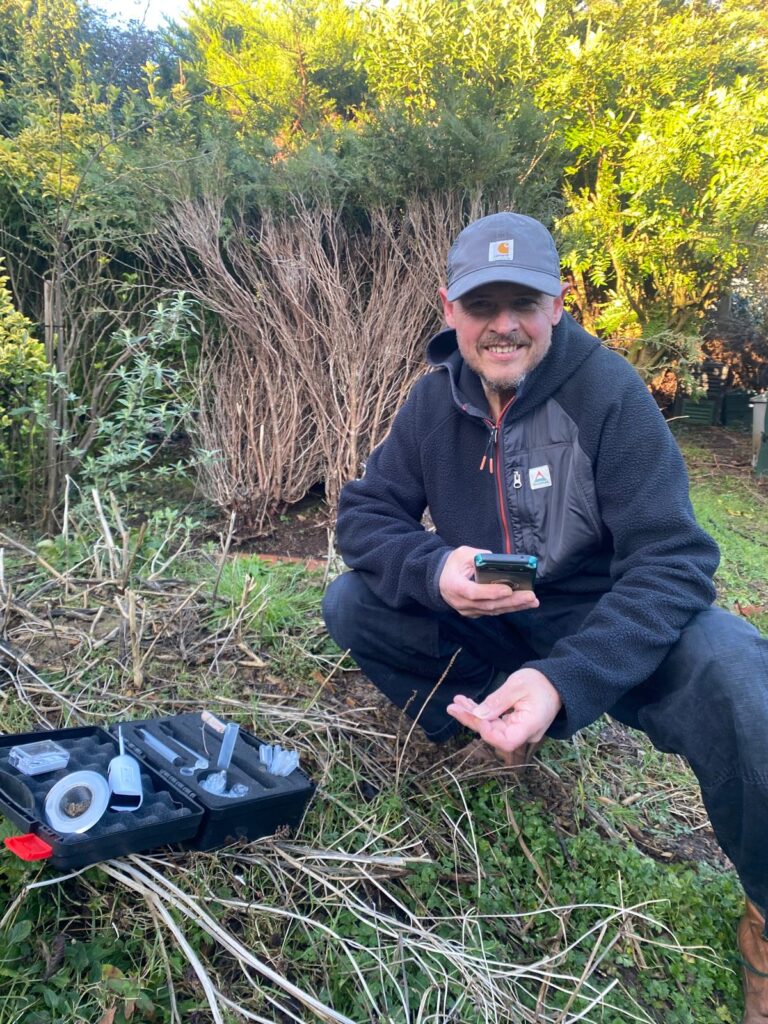
microBIOMETER® is field-ready, delivers results on-site, and doesn’t require expensive lab infrastructure. A land manager can take a soil sample, run a microBIOMETER® test, and log microbial biomass and fungal-to-bacterial ratios straight into the GeoDataTrack® offline capable app, alongside vegetation transects, photo monitoring points, and infiltration measurements. One visit, one platform, a complete ecological snapshot.
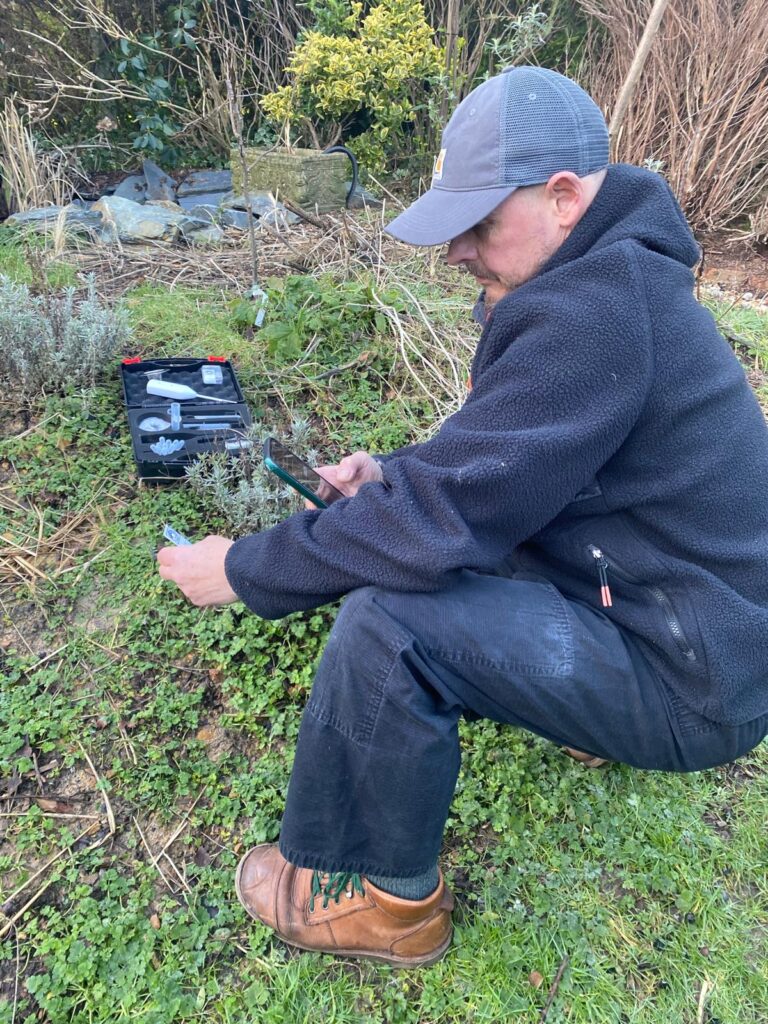
The real power of this collaboration lies in what the data reveals over seasons and years. When a farmer shifts to adaptive grazing or introduces diverse herbal leys, the ecological response builds gradually. GeoDataTrack® captures that trajectory – every observation time-stamped and geolocation-stamped – while microBIOMETER® adds the vital biological dimension. Rising microbial biomass and shifting fungal-to-bacterial ratios are signals that the soil is responding to improved management. Together, this becomes compelling evidence for certification bodies, grant funders, and government schemes that increasingly demand demonstrable ecological outcomes.
We believe the future of regenerative agriculture depends on putting measurement tools directly into the hands of the people managing the land – because when land managers can measure change, they can manage for it. microBIOMETER® shares that vision. Together, we’re going far.
About GeoDataTrack
GeoDataTrack® is an offline-first mobile platform for field data collection in regenerative agriculture and ecological verification, priced at $150 per property per annum. Aligned with the Savory Institute’s Ecological Outcome Verification protocol, GeoDataTrack® puts rigorous ecological monitoring tools directly into the hands of land managers worldwide. Learn more at geodatatrack.com.
Farmers across America are discovering something amazing beneath their feet. The secret to better crops and healthier land isn’t always found in a bottle or bag. It lives naturally in the soil, waiting to be awakened through smart and intentional farming practices. Soil microbial communities play a large role in soil metabolic activity and drive critical ecosystem services like decomposition and nutrient cycling.
Bacteria, fungi, and other microscopic creatures transform dead plant material into food that crops can use. Regenerative agriculture & microbes work together like partners in a successful business. When farmers treat soil as a living system rather than just dirt, these microorganisms multiply and strengthen.
How Traditional Farming Hurts Soil Life
Conventional farming methods can accidentally damage the very organisms that make soil productive and alive. Heavy tilling breaks apart fungal networks that connect plant roots. Chemical fertilizers flood the system with quick nutrients but starve the microbes that naturally produce those same nutrients.
Soil health drops when microbial diversity and abundance decreases. Farms become dependent on more chemicals to achieve the same results. It’s like trying to run a factory with fewer workers each year while expecting the same output.
Different microbes handle different jobs in the soil. Some break down tough plant materials. Others protect crop roots from diseases. Many form partnerships with plants, trading nutrients for sugars. This complexity creates a stable system that keeps working even when conditions change.
Healthy microbial communities also help crops handle stress better. During droughts, diverse soil life improves water retention. When diseases threaten, beneficial microbes compete with harmful ones, protecting plant roots naturally.
Farmers don’t need complicated systems to start improving their soil life. Cover crops provide food for microbes when cash crops aren’t growing. These plants keep living roots in the ground, which helps more microbes stay fed year-round instead of going dormant.
Crop rotation brings diversity that supports more types of beneficial organisms. Different plants feed different microbes, and varying root depths access nutrients from multiple soil layers. This natural variety strengthens the entire system.
The benefits of regenerative farming show up quickly in soil tests and gradually in farm economics. Crops access nutrients more efficiently when healthy microbial populations cycle them naturally. This means farmers are able to spend less on fertilizers while maintaining or improving yields.
Weed and pest pressure often decreases, too. A diverse microbial community supports beneficial insects and creates conditions where crops outcompete weeds naturally. This reduces herbicide needs and the labor involved in weed management.
Fungal to bacterial ratio serves as an important indicator of soil condition. Healthy agricultural soils need both types of microbes, but many farms have shifted too far toward bacteria-dominated systems. Restoring fungal populations helps lock carbon in the soil and improves overall stability, as fungi connect different plants and transport nutrients across distances that roots alone could never reach.
The science behind soil biology keeps advancing, giving farmers better tools and understanding. New microbial products target specific crop needs or soil conditions. Education and support networks help farmers adopt these methods successfully. Universities, extension services, and farmer groups share practical knowledge gained from real-world experience. This collective learning accelerates the regenerative movement.
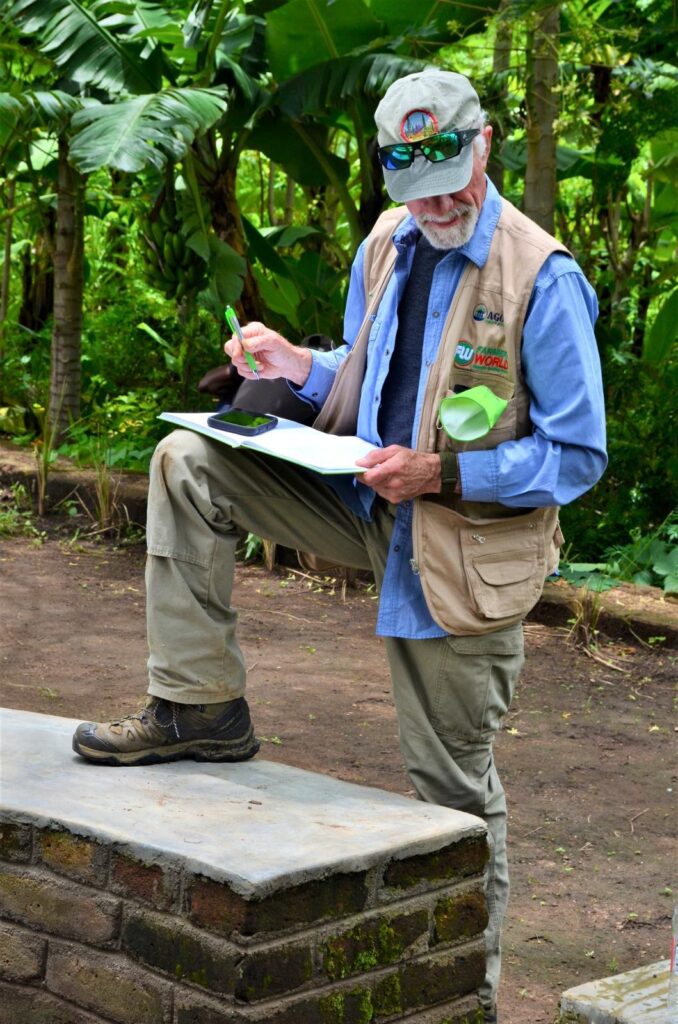
Fred Way has joined forces with APN – the Agroforestry Promotion Network which was founded by Roland Frutig and Lucky Mukasa. He also collaborates with soil stewards and farmers from Kenya, Malawi, Uganda, India and Switzerland.
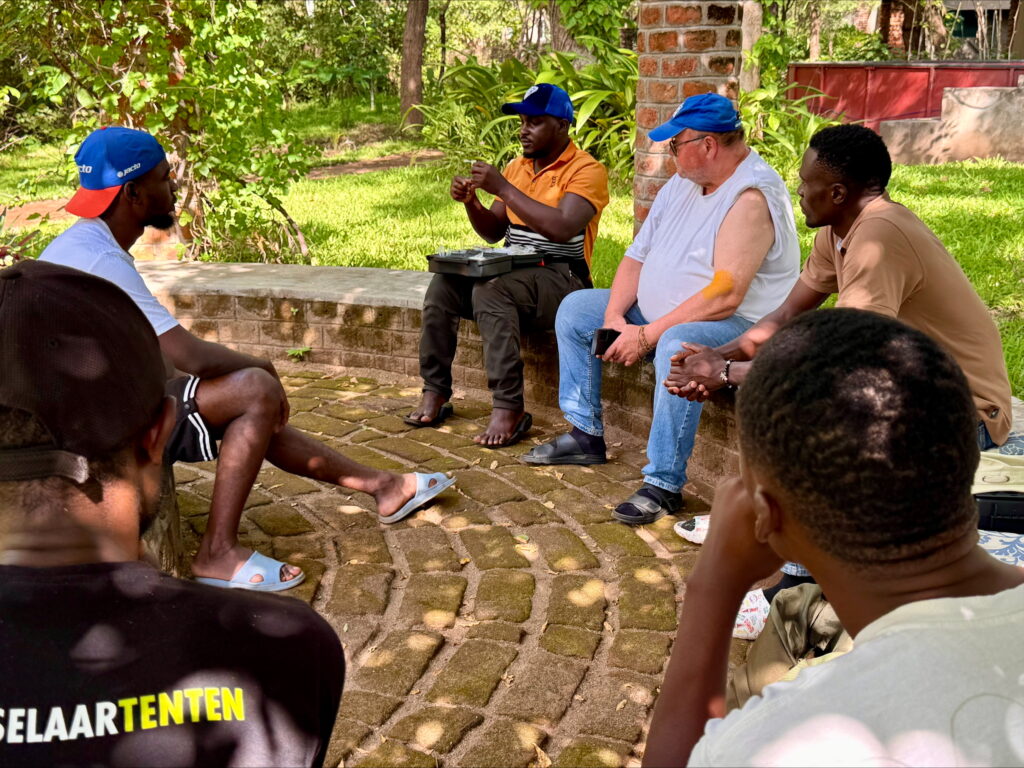
The group travels throughout Africa to Uganda, Egypt, Nigeria, etc. They have educational centers in Malawi and Uganda. Here they host classes several times a year covering various soil practices to assist local growers by enhancing their farming techniques and improvimg forest function. By utilizing microBIOMETER® in these classes, they are able to highlight the importance of soil biology as well as demonstrate how changes in microbial biomass and fungal to bacterial ratio have positive effects on soil.
Whenever they can, they supply farmers with a microBIOMETER® test kit to allow them to easily test and track their soil’s health. While they are still in the beginning stages, their goal is to be able to provide local areas with kits since they are used to determine how native, natural forests function as well.
Fred performed microBIOMETER® testing in a logged forest that was a primary source for rubber in the late 1800’s until tthe early 1900’s. Currently, locals are removing all dead wood for fuel which is creating a loss of food at the trophic level. They use Indigenous microbial organisms (IMOs) in manure and urine (mostly from cows), molasses and other regenerative practices to stimulate the soil. They have discovered that by using these materials, they are able to kickstart the regenerative system. microBIOMETER® has demonstrated that these somewhat unconventional materials are increasing fungal levels over time while bare soil that previously wasn’t producing is now showing signs of life. Their goal is to emulate what’s happening in the forest for their agriculture food production system.
“The affordability and compatibility of microBIOMETER® as well as the real-time results make it easy to understand and track results over time and see improvements quickly. The addition of microBIOMETER® PRO’s advanced calculations and moisture adjustments are a good addition to the test,” – Fred Way
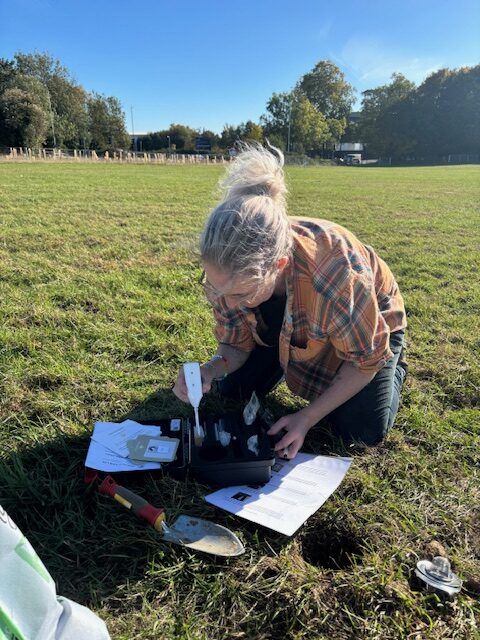
Recently, the Soil Association team was at Woodoaks Farm in Hertfordshire, England collecting soil samples as part of the AI 4 Soil Health project (AI4SH). Madeleine Silberberg, Project Coordinator, coordinates 13 pilot sites across the continent in partnership with leading European institutions. These sites, covering 11 pedoclimatic regions, were selected based on distinctive soil qualities. The team are using advanced measurement techniques, generating new insights into the health of Europe’s soils, testing the assumptions in their models, and helping determine the best monitoring tools for the future.
Soil Association Farming Advisor, Karen Fisher, shares her experience using microBIOMETER® on this project.
“microBIOMETER® turned out to be a genuinely exciting addition to the toolkit. The first test took me a little while, carefully following the instructions step by step, but once I got into the rhythm the process was surprisingly straightforward. The longest part was waiting for the sample to develop but that slotted in nicely while we collected bulk density samples and soils for lab analysis.
I did have a small hiccup with scanning the first card, but I think my app might have been on the wrong mode, but after that everything worked perfectly. Each scan felt a bit like opening a present. I found myself looking forward to seeing what the next result would show.
It was fascinating to see the different patterns emerging across woodland, permanent grassland, conservation fields and compost. Some results weren’t quite what you might expect, for example, a woodland showing a lower fungal: bacterial ratio than a long-term grass field. It is a reminder that context matters: soil biology reflects both current conditions and land use history, and sometimes regeneration takes time.
These kinds of rapid, field-based tools do not replace lab analysis, but they bring soil life into focus in a way that is both practical and accessible. Over time, repeating these tests across seasons and management practices will help us build a richer picture of soil health and feed into the development of different indicators.”
Senior Farming Advisor Josiah Judson, “‘It was great to be out in the field making sure the tools we’re developing actually make sense on the ground and can support different users. It’s an ambitious goal to map these things across so many different landscapes, but the more data we can get, the better!”
Urban gardening isn’t just about growing tomatoes in a small closet. It’s about understanding the complexity of soil microbes in unconventional spaces and utilizing new methods that make city gardening not only possible, but also incredibly rewarding.
Plants with healthy microbial communities in their root zones tend to grow more vigorously and are better equipped to withstand stressors such as drought, pests, and diseases. In urban environments where plants face challenges like air pollution, heat islands, and limited space, this microbial support system becomes even more crucial.
Urban soil faces unique challenges that rural farmland doesn’t necessarily encounter on a daily basis. You’re dealing with:
Start with Quality Organic Matter
Your soil microbes are essentially composting machines, but they need fuel. Add compost, aged manure, or leaf mold regularly. These organic materials provide the carbon and nutrients that feed your microbial community. In cities like Portland and Seattle, many neighborhoods now offer community composting programs—take advantage of them!
Test and Track Your Progress
Understanding your soil’s microbial health doesn’t have to be guesswork. Modern soil testing technology allows you to monitor microbial biomass and the fungal-to-bacterial ratio right from your balcony or rooftop garden. This data helps you understand whether your soil management practices are actually working.
Minimize Chemical Disruption
Synthetic pesticides and fertilizers can disrupt your carefully cultivated microbial community. Instead, focus on building soil biology through organic amendments and natural pest management strategies. Beneficial soil microbes perform fundamental functions such as nutrient cycling, breaking down crop residues, and stimulating plant growth.
A recent study reported by the NIH reveals an intriguing connection between gardening and human health that goes beyond fresh vegetables and exercise. It found that frequent exposure to environmental microbiota, especially through skin to soil contact, diversifies commensal microbiota, enhances immune modulation, and ultimately lowers the risk of immune-mediated diseases.
As more Americans embrace urban gardening & soil health practices, we’re seeing innovations that make microbial monitoring and management more accessible than ever. Whether you’re growing herbs on a fire escape in Brooklyn or maintaining raised beds in a Phoenix community garden, understanding and nurturing your soil’s microbial community will help you grow healthier plants while potentially benefiting your own well-being.

Prolific Earth Sciences is excited to announce the release of microBIOMETER® PRO. This extensive update has been three years in the making and features improved precision, increased consistency between phones, advanced nutrient metrics and sample geolocating. Please update your microBIOMETER® Reader app to 3.8.6 to access the PRO version.
What’s NEW!
• Test card. We redesigned the test card to reduce variance in results between phone models and better adjust for different lighting.
• Results. The results are now expressed as microbial biomass instead of microbial carbon.
• Moisture: We have changed the moisture assumption in our algorithm from 40% to 20% which is more in line with average soils. We also added a feature to allow users to adjust the moisture assumption to reflect soils with moisture contents closer to 10% or 30%. Moisture assumption for compost testing remains at 40%
• Geolocation: This new feature allows users to save the location where their sample was collected and perform the test at a later time while keeping the recorded sample location.
• Advanced Nutrient Metrics: As an understanding of how microbes contribute to nutrient availability increases, we have added calculated metrics to help users understand how their soil microbes are contributing to nitrogen and carbon stores in the soil. These are results extrapolated from microBIOMETER® results and the calculation and assumptions are detailed in the app informational pop-ups and our website FAQs.
• Soil and Compost: The PRO version will test both soil and compost, however, will no longer support direct testing of compost tea or extract.

With the exception of the test cards, all the supplies as well as the instructions will remain the same whether using the Classic or PRO version. The updated app will prompt you to choose a version so you can still use the classic test cards. We will also be selling Classic cards in refills for the foreseeable future. However, all new Starter Kit purchases will now be the PRO version only and contain the new test cards. For customers with ongoing trials, you may want to continue with the Classic test cards to track changes based on historical benchmarked tests.
In the updated app, we have made significant changes to units, underlying assumptions, and calculations. Therefore, we encourage users to continue with one version within a study or experiment since comparing the absolute values of the two is difficult. We have always encouraged using microBIOMETER® as a benchmark test and to focus on the changes over time. We will continue to supply the microBIOMETER® Classic test cards so that ongoing studies and trials can continue. However, we strongly recommend using the PRO version for all new testing and studies.
We would like to thank all of our customers that have given us feedback over the years. Your comments, both good and bad, have helped us improve the microBIOMETER®. Please keep sharing! And as always, we appreciate your continued support.
Can Grow Crop Solutions, a company focused on providing market-leading fluid solutions and service, has been incorporating microBIOMTER® into their business with positive results. Shawn Brenneman, Director of Commercial Growth & Strategy at Can Grow, shared a bit about their company and the testing they are performing.
Vibrant, diversified soil biology is essential in growing crops for maximum yield and quality, Can Grow works with farmers on getting the most out of their cropping systems. They do this through increasing nutrient use efficiency, reducing crop stress, and helping soil/biological systems function at higher levels. Utilizing microBIOMETER® allows their customers to have a greater understanding of how soil type and management practices impact soil biology and advise them on potential solutions to improve performance.
The microBIOMETER® helps Can Grow and their customers determine a baseline of organisms within an entire field or production area that may be high or low yielding. It allows the company to track the improvements their solutions make on the balance and diversity of micro-organisms in the soil. Microbial systems are often hard for growers to understand because they can’t be seen. microBIOMETER® creates a clear picture by quantifying which solutions work in supporting soil health and which ones do not.
 In a bio-fertility trial, ReNew (bacteria/fungi team from Biodyne USA) was applied in furrow with water to corn, Can Grow then evaluated the microbial diversity in the root system of the microbial treated area vs. the non-treated area. The untreated soil had a F: B ratio of fungi 4% and bacteria 96%. This level was much lower than what they wanted for yield optimization. However, it was consistent with what they generally see in tilled, high crop protection use fields. The ReNew treated area had a F:B ratio of fungi 29% and bacteria 71% showing the biology was colonizing the root zone area and providing fertility benefits to the crop.
About Can Grow: The company is much more than a fluid fertilizer company. They have a long, successful history of innovating, adapting and manufacturing fluid solutions to maximize plant potential and soil performance. As a manufacturer, they have the technology and knowledge to innovate and adapt proven fluid solutions to meet changing needs in any market. They assist their clients in addressing factors beyond their control, such as changing environmental conditions, through foliar combinations for application throughout the season.
Find out more at: www.cangrow.com
Our customer Living Water has been utilizing microBIOMETER® to enhance their approach to sustainable farming and to refine their microbial treatments, ensuring they meet the specific needs of each farm.
Their innovative system integrates with the existing irrigation setup to distribute beneficial microbes effectively. With the help of microBIOMETER®’s soil testing, they are able to analyze microbial biomass and adjust the microbial mixes they provide each month, ensuring optimal soil health.

Sales rep Brent taking a soil sample at one of the farms in West Texas
Leveraging microBIOMETER® for Increased Soil Health
Our customer Living Water has been utilizing microBIOMETER® to enhance their approach to sustainable farming and to refine their microbial treatments, ensuring they meet the specific needs of each farm.
Their innovative system integrates with the existing irrigation setup to distribute beneficial microbes effectively. With the help of microBIOMETER®’s soil testing, they are able to analyze microbial biomass and adjust the microbial mixes they provide each month, ensuring optimal soil health.
Key Benefits:
Living Water and microBIOMETER®’s collaboration is the result of their shared passion for soil health and their quest to transform farming with data-driven microbial management.
About Living Water: Living Water is a visionary agricultural technology company with a mission to redefine the way farmers approach soil health. Their flagship product is a subscription-based automated microbe bioreactor that seamlessly infuses essential nutrients into every irrigation cycle. Designed to deliver maximum efficiency with minimal labor, this innovative system eliminates the need for labor-intensive hauling, mixing, or application processes. Learn more at WeSaveSoil.
 Drew Hundelt, Horticultural Specialist and Agroecology Practicioner, has partnered with Gibrill Sesay at Central University in Sierra Leone and microBIOMETER® is playing an important role in their work. Central University is a beautifully maintained college campus nestled in the lush tropical surroundings of Tonkolili in the Northern Provence.
Drew first became acquainted with Gibrill through the United States Department of State’s Community Engagement Exchange Program. The two spent some time at The Urban Farm in Denver facilitating agricultural programming for local neighborhoods. Shortly thereafter, their application to the reciprocal grant was approved which allowed Drew to visit Central University as an agricultural specialist in the Spring of 2023.
Utilizing the microBIOMETER®, Drew is currently working with the university on curriculum development around soil health in agriculture. Their most recent trials analyze how the effects of compost extract using soil from termite hills can bring about exponential growth and drought resistance to crops. The students are using the kit to get real time results of how the fungi to bacteria ratio can be a catalyst to real beneficial change.
“I had the opportunity to collaborate on several lectures and practicums for 30 students in the agricultural department. I spoke on the advantages of regenerative agriculture, community-built systems, and biologically driven yields. What struck me the most was the look in their eyes and how their spirit was teaming with curiosity. I knew then, initiated by the financial constraints of affording a commercial soil diagnostic lab, that I needed to get a biological tool into their hands to foster that curiosity. I am extremely hopeful about what the future holds for Central University, small-holder farmers in Sierra Leone, and West Africa at large. ” Drew Hundelt
