
Fertilizer gives your soil nutrients. Soil microbes decide whether your plants can actually use them. That distinction changes everything about how you should think about crop nutrition, and it’s exactly why we built microBIOMETER®.
Nutrient cycling happens through billions of bacteria and fungi working in your root zone every single day. Skip understanding that process, and you’re managing half the equation.
How Soil Microbes in Nutrient Cycling Actually Work
Soil microbes in nutrient cycling break down organic matter, transform nutrients into plant-available forms, and shuttle them toward root systems. Without this biological activity, nutrients can sit locked in the soil, completely inaccessible to your crops.
Bacteria drive processes like nitrogen fixation, converting atmospheric nitrogen into forms plants can absorb. Fungi, particularly mycorrhizal species, extend root reach dramatically, pulling in phosphorus and water from areas roots alone could never access. Together, these microbial communities form the engine behind soil fertility.
Why Nitrogen Cycling Depends Entirely on Microbial Activity
Nitrogen is the nutrient most crops need in the highest volume, yet it’s also one of the most microbially dependent. Bacteria convert nitrogen gas into ammonium, then into nitrate, through a multi-step biological process called nitrogen cycling.
Without active soil microbes, applied nitrogen fertilizer can volatilize, leach away, or simply sit unused. That’s wasted money and a missed opportunity for your crop.
A healthy microbial population keeps nitrogen cycling efficiently, meaning less fertilizer gets lost and more actually reaches your plants.
Phosphorus Availability and the Fungal Connection
Phosphorus behaves differently than nitrogen. It binds tightly to soil particles, making it one of the least mobile nutrients for plant roots to reach on their own.
This is where beneficial fungi step in. Mycorrhizal fungi form partnerships with plant roots, extending a vast underground network that accesses phosphorus far beyond a root’s natural reach. Crops with strong fungal partnerships consistently show better phosphorus uptake, even in soils where phosphorus levels test as moderate or low.
Signs Your Soil Biology Is Limiting Nutrient Uptake
Sometimes a nutrient deficiency isn’t actually a nutrient problem. It’s a biology problem. Here are common signs your soil microbiome and plant growth connection might be broken:
If any of these signs sound familiar, checking microbial biomass rather than adding more fertilizer might solve the actual problem.
How to Test for Microbial Nutrient Cycling Capacity
Most nutrient testing stops at chemistry. It tells you what’s there, not whether your soil can turn it into something your plants can use.
The microBIOMETER® helps you evaluate your soil’s biological potential by measuring microbial biomass and the fungal-to-bacterial (F:B) ratio in about 20 minutes. These two indicators provide a practical way to assess the strength and balance of the microbial community responsible for nutrient cycling and other essential soil functions.
Rather than relying on a single measurement, you can use microBIOMETER® throughout the season to monitor how cover crops, compost, reduced tillage, biological inputs, or other management practices influence microbial activity. Tracking these changes over time helps you determine whether your soil is becoming more biologically active and better equipped to support efficient nutrient cycling.
A healthier, more active microbial community can improve nutrient availability, helping growers build more resilient soils and reduce reliance on synthetic fertilizers over the long term.
Building Nutrient Efficiency Through Better Soil Biology
Improving nutrient uptake in plants isn’t about applying more inputs. It’s about creating conditions where the soil’s biology can do its job efficiently.
Here’s how growers typically strengthen microbial nutrient cycling:
| Practice | Effect on Nutrient Cycling |
| Reduced tillage | Protects fungal networks that transport phosphorus |
| Cover cropping | Feeds bacteria and boosts nitrogen availability |
| Compost application | Increases overall microbial biomass |
| Diverse crop rotation | Supports broader microbial diversity |
We recommend soil testing before and after implementing these practices. That way you can confirm improved rhizosphere biology instead of assuming it happened.
Why This Matters for Reducing Fertilizer Costs
Fertilizer is expensive, and prices keep climbing. When soil microbes handle nutrient cycling efficiently, plants access more of what’s already in the ground, cutting down how much you need to apply.
Growers who track microbial biomass alongside their fertilization plans often find they can reduce input costs while maintaining or improving yields. That’s the practical payoff of understanding plant-microbe interactions instead of ignoring them.
Making Soil Fertility Decisions with Real Data
Guesswork costs money in farming. We created microBIOMETER® so crop advisors, farmers, and researchers can measure soil biology directly instead of relying on assumptions about what their fertilizer program is achieving.
Frequent retesting shows you whether your nutrient cycling capacity is improving, staying flat, or declining, giving you the data to adjust before yield loss happens.
Frequently Asked Questions
Can healthy soil microbes reduce how much fertilizer I need?
Yes, active soil microbes improve nutrient cycling efficiency, meaning plants access more of the nutrients already present in soil. This often allows growers to reduce synthetic fertilizer applications while maintaining yield, since less nutrient gets wasted through leaching or unavailability.
What is the rhizosphere and why does it matter?
The rhizosphere is the narrow zone of soil directly surrounding plant roots, where microbial activity is most concentrated. This area is where most nutrient exchange, microbial communication, and root interaction happens, making it the most important zone for plant nutrition and overall soil fertility.
Do all crops benefit equally from mycorrhizal fungi?
No,mycorrhizal fungi-based benefit levels vary by crop species. Many row crops, fruit trees, and perennials form strong mycorrhizal partnerships that boost phosphorus and water uptake significantly. Some plant families, like brassicas, form weaker or no mycorrhizal relationships, relying more heavily on bacterial nutrient cycling instead.
How quickly can improved soil biology affect plant uptake?
Noticeable improvements in nutrient uptake can appear within a single growing season after practices like cover cropping or reduced tillage. Full microbial community rebuilding, however, typically takes one to three years of consistent biological-focused management for lasting results.
Is nutrient mineralization the same as nutrient cycling?
Nutrient mineralization is one specific step within the broader nutrient cycling process. It refers to microbes converting organic nutrients into inorganic, plant-available forms. Nutrient cycling includes mineralization along with other processes like nitrogen fixation, immobilization, and nutrient transport toward roots.
You can till your soil, water it, and fertilize it right on schedule, and yet your soil can still struggle where it matters most: below the surface. Soil microbial activity is the real story of soil health, and most growers never get to read it. We built microBIOMETER® because guessing shouldn’t be part of farming.
Chemical tests tell you what nutrients are sitting in your soil today. They don’t tell you whether your soil can actually cycle those nutrients tomorrow. That job belongs to bacteria and fungi living in the ground beneath your feet.
What Is Soil Microbial Activity?
Soil microbial activity refers to how alive and active the bacteria and fungi in your soil are. These microbes break down organic matter, fix nitrogen, and build the structure that lets roots breathe and water move. Research shows that microbial biomass is the leading indicator of soil health, ahead of pH or nutrient panels alone. A soil packed with beneficial microorganisms can fix nutrients naturally, improve plant immunity, and hold water more efficiently. That means fewer inputs and stronger yields over time.
Why Chemical Tests Alone Miss the Bigger Picture
A standard soil test measures nutrients like nitrogen, phosphorus, and potassium at one moment in time. It says nothing about whether your soil ecosystem can keep producing those nutrients season after season.
Living soil functions like a factory. Chemical tests check the warehouse inventory. Biological testing checks whether the machines are actually running.
Here’s what gets missed when you skip biological testing:
How to Measure Soil Microbial Activity Without a Lab
The microBIOMETER® lets you measure soil microbial activity in about 20 minutes, right where you collect your sample. Instead of sending soil to a laboratory, the test uses a patented process that extracts microbes from the soil. As the heavier soil particles settle, the soil-colored
microbes remain suspended in the liquid. A small sample of this suspension is then placed on a test card and scanned using the microBIOMETER® smartphone app, available for both iPhone and Android.
The app analyzes the color intensity of the microbial suspension against a built-in reference on the test card to provide lab-grade measurements of microbial biomass and the fungal-to-bacterial (F:B) ratio.
Rather than serving as a one-time test, microBIOMETER® is designed to help you track changes over time. By testing the same field throughout the season or comparing different fields under different management practices, you can see whether your soil health strategy is increasing microbial biomass and improving the fungal-to-bacterial balance. Consistent sampling methods and testing conditions help ensure the most reliable comparisons.
Indicators of Healthy Soil Biology You Can Actually Track
A biologically healthy soil shows specific, measurable signs. Growers using biological soil health assessment regularly report better structure, improved water retention, and more consistent yields across seasons.
| Indicator | What It Tells You |
| High microbial biomass | Strong nutrient cycling capacity |
| Balanced fungal to bacterial (F:B) ratio | Soil suited to your specific crop |
| Consistent biomass across retests | Management practices are working |
| Rising biomass trend | Soil resilience is improving |
We recommend retesting every few weeks during active growing season. One test gives you a snapshot. Frequent retesting gives you a trend, and trends are what actually guide decisions.
Tracking Whether Your Soil Management Practices Are Working
You added compost. You reduced tillage. You switched to cover crops. But did any of it move the needle on soil microbial activity?
This is where most growers get stuck. Without measurable biological insights, you’re left guessing based on how the soil looks or feels. microBIOMETER® lets you test before and after any management change, so you can see the actual impact on microbial biomass instead of hoping for the best.
Quick management effectiveness checks matter because inputs cost money. Knowing which amendments genuinely boost your soil microbiome means you stop wasting budget on ones that don’t.
Building Regenerative Agriculture Outcomes That Last
Regenerative agriculture depends on one thing above all: living soil that keeps improving instead of degrading. Monitoring soil biology over time helps you track carbon storage progress and long-term soil resilience, not just this year’s harvest.
We work with growers, agronomists, and researchers who want proof their regenerative practices are working. microBIOMETER® gives that proof through consistent, affordable, on-site testing that fits into any season’s workflow.
Improving soil microbial activity isn’t a one-time fix. It’s an ongoing relationship between what you do to your soil and what your soil does back for you.
The Bottom Line on Soil Biology
Soil health isn’t just chemistry. It’s biology, and biology needs to be measured directly to be understood. We built microBIOMETER® so growers, consultants, and researchers everywhere can finally see what’s happening beneath the surface, without waiting weeks or spending a fortune on lab work.
Frequently Asked Questions
What does low soil microbial activity mean for crop yield?
Low soil microbial activity usually means poor nutrient cycling, weaker plant immunity, and reduced water retention. Crops in such soil often need more fertilizer to achieve the same results, since the natural biological processes that support root health and nutrient uptake are underperforming.
How often should I test soil microbial biomass?
Most agronomists recommend testing every 4 to 6 weeks during the growing season, especially after applying amendments. Frequent retesting with microBIOMETER® reveals trends in microbial biomass, helping you confirm whether management changes are improving soil biology or having little effect.
Can soil microbial activity be improved quickly?
Soil microbial activity can shift within weeks after changes like reduced tillage, cover cropping, or compost application, though major improvements typically take one to two full growing seasons. Consistent, science-backed practices paired with regular biological testing produce the most reliable long-term gains.
Is fungal to bacterial ratio the same for every crop?
No, fungal to bacterial ratio needs vary by crop type. Row crops often perform well with more bacterial-dominant soil, while perennials and forests typically thrive with higher fungal presence. Testing your specific ratio helps you match soil biology to what your crop actually needs.
Does tillage always harm soil microbial health?
Frequent, deep tillage generally disrupts fungal networks and reduces microbial diversity over time. Occasional, shallow tillage causes less damage, especially when paired with organic matter additions. Reduced or no-till practices, combined with regular biological testing, tend to support stronger long-term microbial biomass.
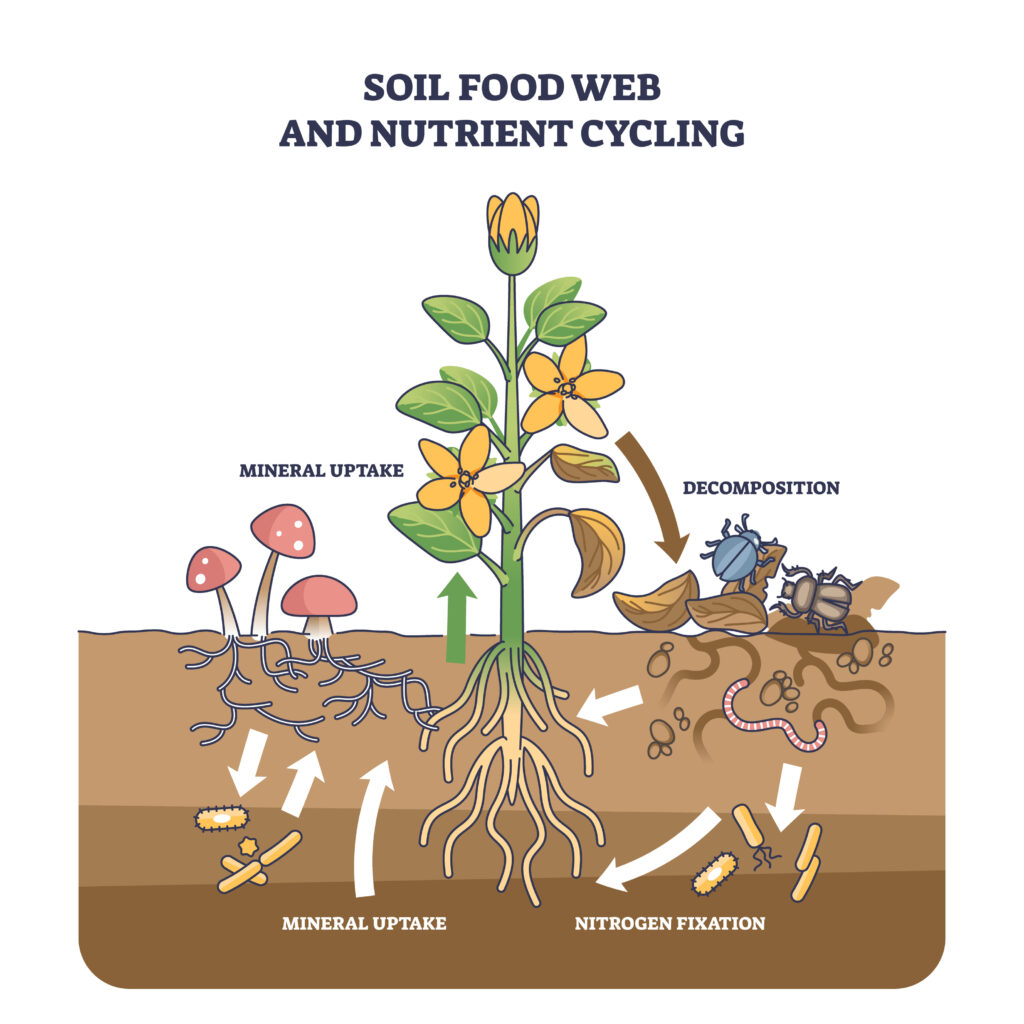
Most farmers focus on what they can see: the crop, the weather, and the yield. But some of the most important activity on any farm happens underground, where millions of tiny organisms are constantly working. Understanding the soil food web helps you make better decisions about how you manage your land.
And once you understand it, you start to see your soil completely differently.
The soil food web is the network of living things that exist in healthy soil. Bacteria, fungi, protozoa, nematodes, earthworms, and many other organisms all interact with each other and with plant roots in a constant cycle of feeding, dying, and decomposing.
Think of it like a food chain, but underground. Plants feed microbes. Microbes feed larger organisms. Those organisms die and release nutrients back into the soil. The cycle keeps going, and plants benefit from every stage of it.
Healthy soil is not just dirt with some nutrients in it. It is a living system. When the microbial biomass in your soil is strong, meaning the bacteria and fungi populations are active and balanced, several things happen naturally:
Bacteria and fungi are the foundation of the soil food web. They break down organic matter, release nutrients, and build the structure that holds soil together.
Bacteria tend to dominate in soils that get tilled frequently or treated with synthetic fertilisers. They cycle nutrients quickly but do not build long-term soil structure as effectively.
Fungi are slower but more powerful for long-term soil health. Fungal networks connect plant roots, transport nutrients over long distances, and help build the stable carbon structures that improve water retention. The fungal-to-bacterial ratio in your soil tells you a lot about where your soil health currently stands.
For agronomists working with multiple farms or fields, understanding the soil food web shifts the conversation from “what fertiliser do we apply” to “what does the biology in this soil actually need.”
That is a more useful question. It leads to decisions that improve long-term productivity rather than just patching short-term deficiencies.
The challenge has always been measurement. Soil microbial testing used to require lab equipment, long waiting times, and high cost. That made frequent testing impractical for most farms.
The soil food web is not a complicated concept once you break it down. Living soil feeds plants. Healthy microbes reduce the need for external inputs. And tracking soil biology over time gives farmers and agronomists the information they need to make genuinely better decisions.
The soil is already doing the work. Understanding it just helps you work with it instead of against it.
Healthy soil contains billions of tiny living organisms that farmers can’t see with their eyes. Soil biology impacts everything from how well crops grow to how much food farmers harvest each season. Understanding these microscopic helpers can transform struggling fields into productive farmland across the USA.
The Living World Beneath Your Feet
Soil is a complex ecosystem filled with bacteria, fungi, protozoa, and countless other microorganisms. These tiny creatures work together to create what scientists call microbial biomass, which essentially means the total mass of all living things in the soil. These microbes break down dead plant material, release nutrients, and protect roots from diseases.
Farmers who ignore soil biology often struggle with poor yields despite using expensive fertilizers. The problem isn’t always a lack of nutrients but rather a lack of living organisms to make those nutrients available to plants. Healthy soil microbes act like tiny factories that process raw materials into forms plants can actually use.
How Microbes Feed Your Crops
● Plants need nitrogen, phosphorus, potassium, and many other nutrients to grow strong and produce good yields. Chemical fertilizers provide these elements, but plants can’t always absorb them efficiently without help from soil biology.
● Some bacteria form nodules on roots as an exchange site where they give the plant fixed nitrogen and receive carbohydrates form the plant. Other types of bacteria are free-living and can fix nitrogen without directly living on the roots.
● Microbes also produce natural chemicals that stimulate plant growth. These substances work like vitamins for plants, boosting their immune systems and helping them resist stress from drought, heat, or pests.
Root Development Starts With Biology
Plant roots don’t grow alone in the soil. They partner with fungi called mycorrhizae that attach to root surfaces and extend deep into the ground. Healthy root development depends heavily on this partnership. The fungi gather water and nutrients from far away and deliver them to plant roots.
In return, plants share sugars they make through photosynthesis with their fungal partners. Soil bacteria also cluster around plant roots in areas called the rhizosphere. They create a living shield that can help keep plants healthy without requiring chemical treatments.
Testing Your Soil’s Living Community
Farmers across the USA now test their soil biology regularly to track improvements. Traditional soil tests only measure chemical nutrients, missing the crucial living component that drives soil health.
Modern testing methods allow farmers to measure microbial biomass quickly without sending samples to distant laboratories. The microBIOMETER® Soil Test Kit takes just 20 minutes and works right in the field on fresh soil. This real-time data helps farmers see if their management practices actually improve soil life.
Building Soil Biology Takes Time
Improving soil biology doesn’t happen overnight. Microbes need food, water, and proper conditions to multiply. Farmers build populations gradually through practices that support microbial life rather than destroy it.
Adding organic matter like compost or cover crops feeds soil organisms. Living roots in the ground year-round provide constant food for microbes. Regenerative agriculture practices focus specifically on building soil biology.
Soil biology impacts every aspect of farming, from root development to final harvest. Farmers who nurture the living community in their soil see stronger plants, better yields, and lower input costs. Understanding and supporting soil microbes isn’t just good science, it’s good business for American agriculture.
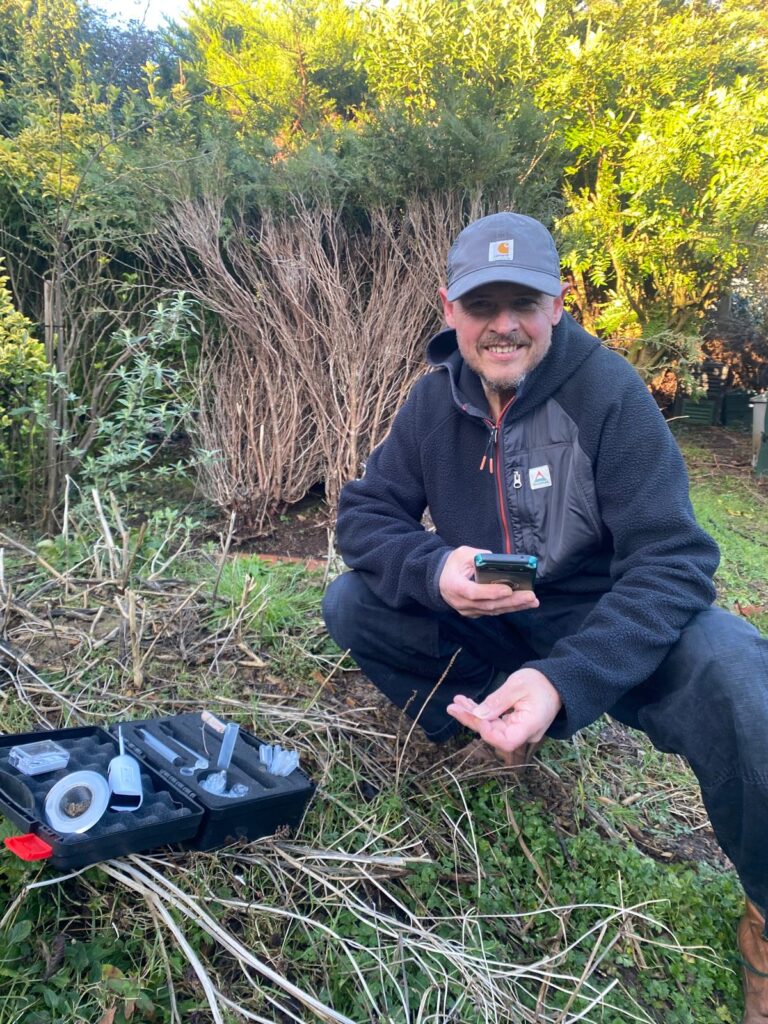
Regenerative agriculture is gaining momentum across the world, but momentum alone isn’t enough. Farmers, land managers, and policymakers are all asking the same question: where’s the evidence? That’s what drove us to build GeoDataTrack® – an offline-first mobile platform that makes rigorous ecological data collection accessible and affordable. Because the truth is simple: you can’t manage what you don’t measure, and you can’t prove regeneration without the data to back it up. That’s also why we’re so excited about our collaboration with microBIOMETER®.
The regenerative movement has a compelling story to tell, but stories need data. Whether a farmer or land manager is seeking ecological certification, applying for results-based payments, or demonstrating progress to stakeholders, they need a structured, repeatable way to capture what’s happening on their land. Most monitoring platforms are built for large corporates with price tags to match, leaving the land managers actually driving ecological change priced out entirely. GeoDataTrack® was built to close that gap.
Soil biology is the engine room of regeneration. You can measure ground cover, species diversity, and water infiltration all day long, but without understanding the microbial community beneath the surface, you’re only seeing half the picture. Our collaboration with microBIOMETER® is a natural fit because we share a core belief: practical, affordable tools belong in the hands of the people managing the land, not locked away in laboratories.
microBIOMETER® is field-ready, delivers results on-site, and doesn’t require expensive lab infrastructure. A land manager can take a soil sample, run a microBIOMETER® test, and log microbial biomass and fungal-to-bacterial ratios straight into the GeoDataTrack® offline capable app, alongside vegetation transects, photo monitoring points, and infiltration measurements. One visit, one platform, a complete ecological snapshot.
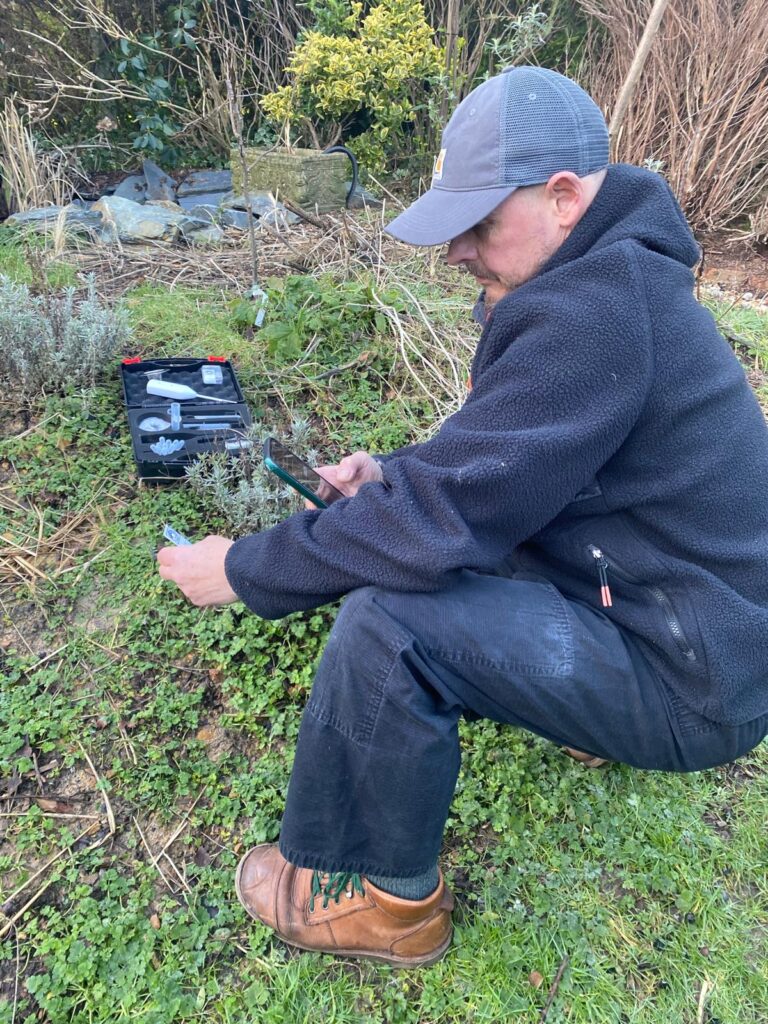
The real power of this collaboration lies in what the data reveals over seasons and years. When a farmer shifts to adaptive grazing or introduces diverse herbal leys, the ecological response builds gradually. GeoDataTrack® captures that trajectory – every observation time-stamped and geolocation-stamped – while microBIOMETER® adds the vital biological dimension. Rising microbial biomass and shifting fungal-to-bacterial ratios are signals that the soil is responding to improved management. Together, this becomes compelling evidence for certification bodies, grant funders, and government schemes that increasingly demand demonstrable ecological outcomes.
We believe the future of regenerative agriculture depends on putting measurement tools directly into the hands of the people managing the land – because when land managers can measure change, they can manage for it. microBIOMETER® shares that vision. Together, we’re going far.
About GeoDataTrack
GeoDataTrack® is an offline-first mobile platform for field data collection in regenerative agriculture and ecological verification, priced at $150 per property per annum. Aligned with the Savory Institute’s Ecological Outcome Verification protocol, GeoDataTrack® puts rigorous ecological monitoring tools directly into the hands of land managers worldwide. Learn more at geodatatrack.com.
Farmers across America are discovering something amazing beneath their feet. The secret to better crops and healthier land isn’t always found in a bottle or bag. It lives naturally in the soil, waiting to be awakened through smart and intentional farming practices. Soil microbial communities play a large role in soil metabolic activity and drive critical ecosystem services like decomposition and nutrient cycling.
Bacteria, fungi, and other microscopic creatures transform dead plant material into food that crops can use. Regenerative agriculture & microbes work together like partners in a successful business. When farmers treat soil as a living system rather than just dirt, these microorganisms multiply and strengthen.
How Traditional Farming Hurts Soil Life
Conventional farming methods can accidentally damage the very organisms that make soil productive and alive. Heavy tilling breaks apart fungal networks that connect plant roots. Chemical fertilizers flood the system with quick nutrients but starve the microbes that naturally produce those same nutrients.
Soil health drops when microbial diversity and abundance decreases. Farms become dependent on more chemicals to achieve the same results. It’s like trying to run a factory with fewer workers each year while expecting the same output.
Different microbes handle different jobs in the soil. Some break down tough plant materials. Others protect crop roots from diseases. Many form partnerships with plants, trading nutrients for sugars. This complexity creates a stable system that keeps working even when conditions change.
Healthy microbial communities also help crops handle stress better. During droughts, diverse soil life improves water retention. When diseases threaten, beneficial microbes compete with harmful ones, protecting plant roots naturally.
Farmers don’t need complicated systems to start improving their soil life. Cover crops provide food for microbes when cash crops aren’t growing. These plants keep living roots in the ground, which helps more microbes stay fed year-round instead of going dormant.
Crop rotation brings diversity that supports more types of beneficial organisms. Different plants feed different microbes, and varying root depths access nutrients from multiple soil layers. This natural variety strengthens the entire system.
The benefits of regenerative farming show up quickly in soil tests and gradually in farm economics. Crops access nutrients more efficiently when healthy microbial populations cycle them naturally. This means farmers are able to spend less on fertilizers while maintaining or improving yields.
Weed and pest pressure often decreases, too. A diverse microbial community supports beneficial insects and creates conditions where crops outcompete weeds naturally. This reduces herbicide needs and the labor involved in weed management.
Fungal to bacterial ratio serves as an important indicator of soil condition. Healthy agricultural soils need both types of microbes, but many farms have shifted too far toward bacteria-dominated systems. Restoring fungal populations helps lock carbon in the soil and improves overall stability, as fungi connect different plants and transport nutrients across distances that roots alone could never reach.
The science behind soil biology keeps advancing, giving farmers better tools and understanding. New microbial products target specific crop needs or soil conditions. Education and support networks help farmers adopt these methods successfully. Universities, extension services, and farmer groups share practical knowledge gained from real-world experience. This collective learning accelerates the regenerative movement.

Fred Way has joined forces with APN – the Agroforestry Promotion Network which was founded by Roland Frutig and Lucky Mukasa. He also collaborates with soil stewards and farmers from Kenya, Malawi, Uganda, India and Switzerland.
The group travels throughout Africa to Uganda, Egypt, Nigeria, etc. They have educational centers in Malawi and Uganda. Here they host classes several times a year covering various soil practices to assist local growers by enhancing their farming techniques and improvimg forest function. By utilizing microBIOMETER® in these classes, they are able to highlight the importance of soil biology as well as demonstrate how changes in microbial biomass and fungal to bacterial ratio have positive effects on soil.
Whenever they can, they supply farmers with a microBIOMETER® test kit to allow them to easily test and track their soil’s health. While they are still in the beginning stages, their goal is to be able to provide local areas with kits since they are used to determine how native, natural forests function as well.
Fred performed microBIOMETER® testing in a logged forest that was a primary source for rubber in the late 1800’s until tthe early 1900’s. Currently, locals are removing all dead wood for fuel which is creating a loss of food at the trophic level. They use Indigenous microbial organisms (IMOs) in manure and urine (mostly from cows), molasses and other regenerative practices to stimulate the soil. They have discovered that by using these materials, they are able to kickstart the regenerative system. microBIOMETER® has demonstrated that these somewhat unconventional materials are increasing fungal levels over time while bare soil that previously wasn’t producing is now showing signs of life. Their goal is to emulate what’s happening in the forest for their agriculture food production system.
“The affordability and compatibility of microBIOMETER® as well as the real-time results make it easy to understand and track results over time and see improvements quickly. The addition of microBIOMETER® PRO’s advanced calculations and moisture adjustments are a good addition to the test,” – Fred Way
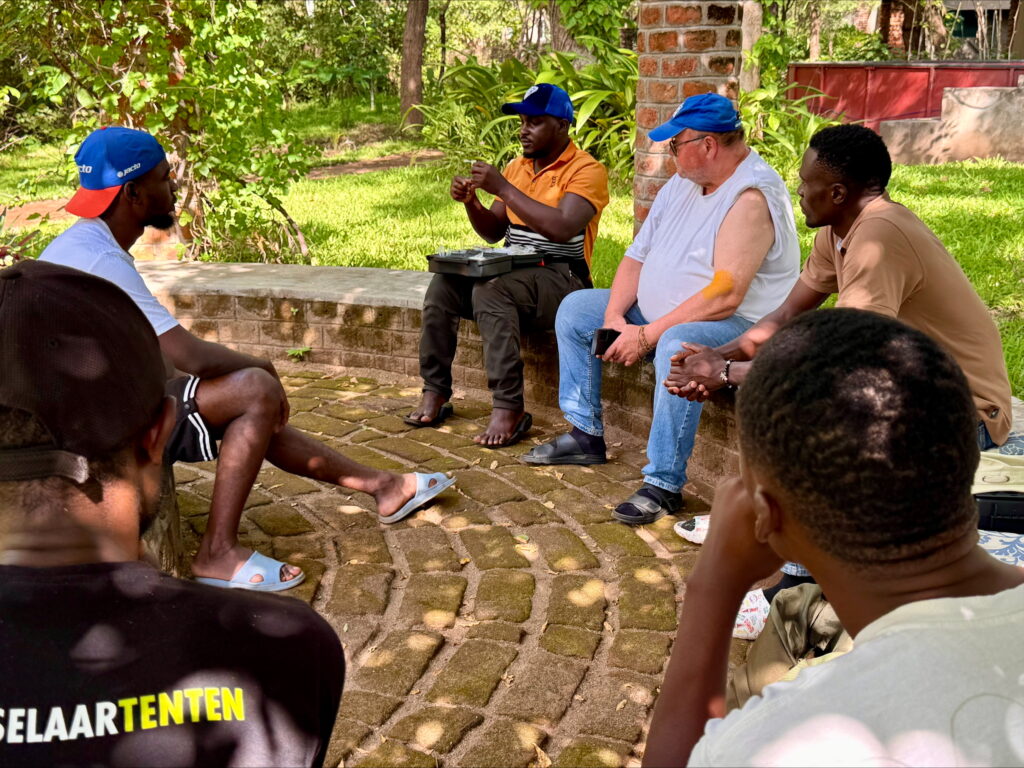
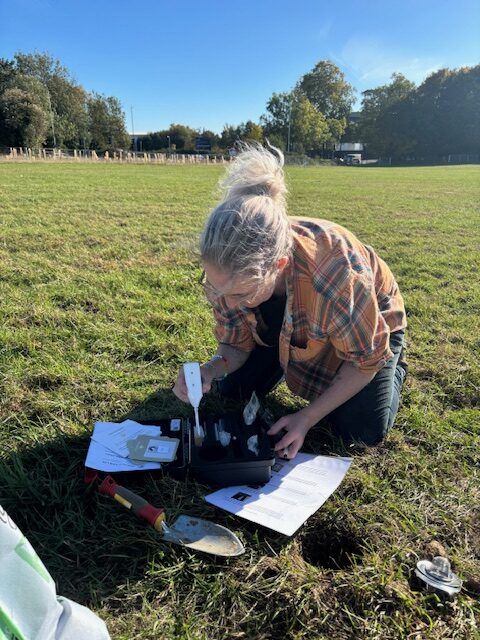
Recently, the Soil Association team was at Woodoaks Farm in Hertfordshire, England collecting soil samples as part of the AI 4 Soil Health project (AI4SH). Madeleine Silberberg, Project Coordinator, coordinates 13 pilot sites across the continent in partnership with leading European institutions. These sites, covering 11 pedoclimatic regions, were selected based on distinctive soil qualities. The team are using advanced measurement techniques, generating new insights into the health of Europe’s soils, testing the assumptions in their models, and helping determine the best monitoring tools for the future.
Soil Association Farming Advisor, Karen Fisher, shares her experience using microBIOMETER® on this project.
“microBIOMETER® turned out to be a genuinely exciting addition to the toolkit. The first test took me a little while, carefully following the instructions step by step, but once I got into the rhythm the process was surprisingly straightforward. The longest part was waiting for the sample to develop but that slotted in nicely while we collected bulk density samples and soils for lab analysis.
I did have a small hiccup with scanning the first card, but I think my app might have been on the wrong mode, but after that everything worked perfectly. Each scan felt a bit like opening a present. I found myself looking forward to seeing what the next result would show.
It was fascinating to see the different patterns emerging across woodland, permanent grassland, conservation fields and compost. Some results weren’t quite what you might expect, for example, a woodland showing a lower fungal: bacterial ratio than a long-term grass field. It is a reminder that context matters: soil biology reflects both current conditions and land use history, and sometimes regeneration takes time.
These kinds of rapid, field-based tools do not replace lab analysis, but they bring soil life into focus in a way that is both practical and accessible. Over time, repeating these tests across seasons and management practices will help us build a richer picture of soil health and feed into the development of different indicators.”
Senior Farming Advisor Josiah Judson, “‘It was great to be out in the field making sure the tools we’re developing actually make sense on the ground and can support different users. It’s an ambitious goal to map these things across so many different landscapes, but the more data we can get, the better!”
Urban gardening isn’t just about growing tomatoes in a small closet. It’s about understanding the complexity of soil microbes in unconventional spaces and utilizing new methods that make city gardening not only possible, but also incredibly rewarding.
Plants with healthy microbial communities in their root zones tend to grow more vigorously and are better equipped to withstand stressors such as drought, pests, and diseases. In urban environments where plants face challenges like air pollution, heat islands, and limited space, this microbial support system becomes even more crucial.
Urban soil faces unique challenges that rural farmland doesn’t necessarily encounter on a daily basis. You’re dealing with:
Start with Quality Organic Matter
Your soil microbes are essentially composting machines, but they need fuel. Add compost, aged manure, or leaf mold regularly. These organic materials provide the carbon and nutrients that feed your microbial community. In cities like Portland and Seattle, many neighborhoods now offer community composting programs—take advantage of them!
Test and Track Your Progress
Understanding your soil’s microbial health doesn’t have to be guesswork. Modern soil testing technology allows you to monitor microbial biomass and the fungal-to-bacterial ratio right from your balcony or rooftop garden. This data helps you understand whether your soil management practices are actually working.
Minimize Chemical Disruption
Synthetic pesticides and fertilizers can disrupt your carefully cultivated microbial community. Instead, focus on building soil biology through organic amendments and natural pest management strategies. Beneficial soil microbes perform fundamental functions such as nutrient cycling, breaking down crop residues, and stimulating plant growth.
A recent study reported by the NIH reveals an intriguing connection between gardening and human health that goes beyond fresh vegetables and exercise. It found that frequent exposure to environmental microbiota, especially through skin to soil contact, diversifies commensal microbiota, enhances immune modulation, and ultimately lowers the risk of immune-mediated diseases.
As more Americans embrace urban gardening & soil health practices, we’re seeing innovations that make microbial monitoring and management more accessible than ever. Whether you’re growing herbs on a fire escape in Brooklyn or maintaining raised beds in a Phoenix community garden, understanding and nurturing your soil’s microbial community will help you grow healthier plants while potentially benefiting your own well-being.

Prolific Earth Sciences is excited to announce the release of microBIOMETER® PRO. This extensive update has been three years in the making and features improved precision, increased consistency between phones, advanced nutrient metrics and sample geolocating. Please update your microBIOMETER® Reader app to 3.8.6 to access the PRO version.
What’s NEW!
• Test card. We redesigned the test card to reduce variance in results between phone models and better adjust for different lighting.
• Results. The results are now expressed as microbial biomass instead of microbial carbon.
• Moisture: We have changed the moisture assumption in our algorithm from 40% to 20% which is more in line with average soils. We also added a feature to allow users to adjust the moisture assumption to reflect soils with moisture contents closer to 10% or 30%. Moisture assumption for compost testing remains at 40%
• Geolocation: This new feature allows users to save the location where their sample was collected and perform the test at a later time while keeping the recorded sample location.
• Advanced Nutrient Metrics: As an understanding of how microbes contribute to nutrient availability increases, we have added calculated metrics to help users understand how their soil microbes are contributing to nitrogen and carbon stores in the soil. These are results extrapolated from microBIOMETER® results and the calculation and assumptions are detailed in the app informational pop-ups and our website FAQs.
• Soil and Compost: The PRO version will test both soil and compost, however, will no longer support direct testing of compost tea or extract.

With the exception of the test cards, all the supplies as well as the instructions will remain the same whether using the Classic or PRO version. The updated app will prompt you to choose a version so you can still use the classic test cards. We will also be selling Classic cards in refills for the foreseeable future. However, all new Starter Kit purchases will now be the PRO version only and contain the new test cards. For customers with ongoing trials, you may want to continue with the Classic test cards to track changes based on historical benchmarked tests.
In the updated app, we have made significant changes to units, underlying assumptions, and calculations. Therefore, we encourage users to continue with one version within a study or experiment since comparing the absolute values of the two is difficult. We have always encouraged using microBIOMETER® as a benchmark test and to focus on the changes over time. We will continue to supply the microBIOMETER® Classic test cards so that ongoing studies and trials can continue. However, we strongly recommend using the PRO version for all new testing and studies.
We would like to thank all of our customers that have given us feedback over the years. Your comments, both good and bad, have helped us improve the microBIOMETER®. Please keep sharing! And as always, we appreciate your continued support.