
Healthy soil contains billions of tiny living organisms that farmers can’t see with their eyes. Soil biology impacts everything from how well crops grow to how much food farmers harvest each season. Understanding these microscopic helpers can transform struggling fields into productive farmland across the USA.
The Living World Beneath Your Feet
Soil is a complex ecosystem filled with bacteria, fungi, protozoa, and countless other microorganisms. These tiny creatures work together to create what scientists call microbial biomass, which essentially means the total mass of all living things in the soil. These microbes break down dead plant material, release nutrients, and protect roots from diseases.
Farmers who ignore soil biology often struggle with poor yields despite using expensive fertilizers. The problem isn’t always a lack of nutrients but rather a lack of living organisms to make those nutrients available to plants. Healthy soil microbes act like tiny factories that process raw materials into forms plants can actually use.
How Microbes Feed Your Crops
● Plants need nitrogen, phosphorus, potassium, and many other nutrients to grow strong and produce good yields. Chemical fertilizers provide these elements, but plants can’t always absorb them efficiently without help from soil biology.
● Some bacteria form nodules on roots as an exchange site where they give the plant fixed nitrogen and receive carbohydrates form the plant. Other types of bacteria are free-living and can fix nitrogen without directly living on the roots.
● Microbes also produce natural chemicals that stimulate plant growth. These substances work like vitamins for plants, boosting their immune systems and helping them resist stress from drought, heat, or pests.
Root Development Starts With Biology
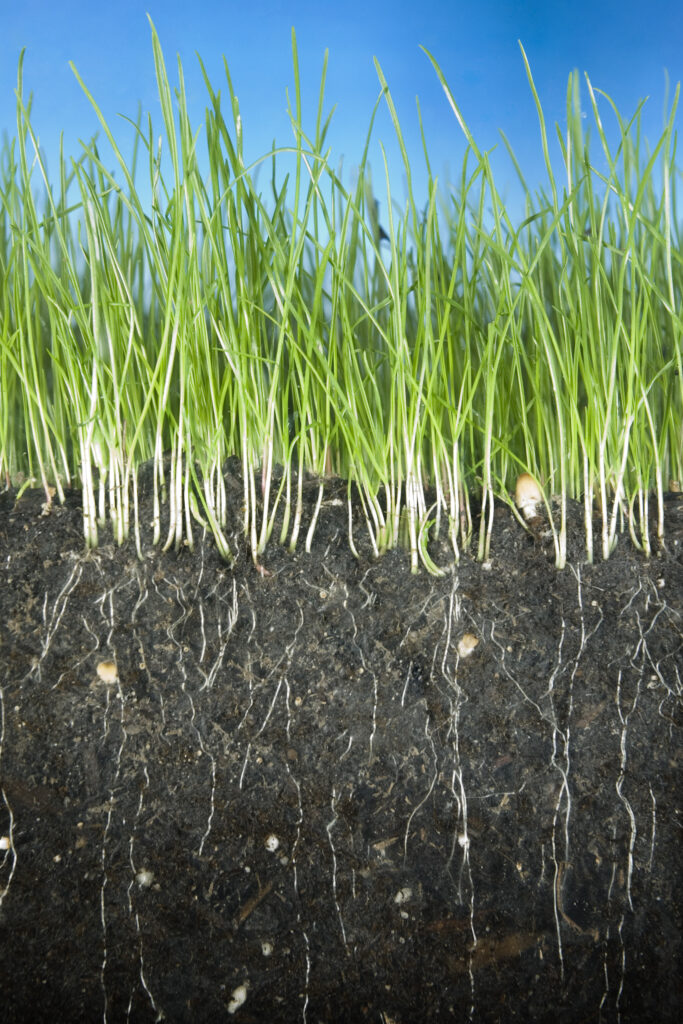
Plant roots don’t grow alone in the soil. They partner with fungi called mycorrhizae that attach to root surfaces and extend deep into the ground. Healthy root development depends heavily on this partnership. The fungi gather water and nutrients from far away and deliver them to plant roots.
In return, plants share sugars they make through photosynthesis with their fungal partners. Soil bacteria also cluster around plant roots in areas called the rhizosphere. They create a living shield that can help keep plants healthy without requiring chemical treatments.
Testing Your Soil’s Living Community
Farmers across the USA now test their soil biology regularly to track improvements. Traditional soil tests only measure chemical nutrients, missing the crucial living component that drives soil health.
Modern testing methods allow farmers to measure microbial biomass quickly without sending samples to distant laboratories. The microBIOMETER® Soil Test Kit takes just 20 minutes and works right in the field on fresh soil. This real-time data helps farmers see if their management practices actually improve soil life.
Building Soil Biology Takes Time
Improving soil biology doesn’t happen overnight. Microbes need food, water, and proper conditions to multiply. Farmers build populations gradually through practices that support microbial life rather than destroy it.
Adding organic matter like compost or cover crops feeds soil organisms. Living roots in the ground year-round provide constant food for microbes. Regenerative agriculture practices focus specifically on building soil biology.
Soil biology impacts every aspect of farming, from root development to final harvest. Farmers who nurture the living community in their soil see stronger plants, better yields, and lower input costs. Understanding and supporting soil microbes isn’t just good science, it’s good business for American agriculture.
Getting your soil test results back feels exciting. You hold numbers that reveal what is happening beneath your feet. But staring at those numbers can feel confusing if you do not know what they mean or how to use them.
DIY soil testing has made understanding soil health accessible to everyone. Instead of sending samples to distant laboratories and waiting weeks, people can now test their soil on-site and get immediate answers. This guide will help you understand those results and use them to improve your land.
Importance of Testing for Microbial Biomass
Many people make changes to their soil based on guesswork. They add fertilizers, compost, or other amendments, hoping for improvement. Traditional soil tests measure chemical properties like nitrogen, phosphorus, and pH levels through various methods. These numbers provide useful information but miss the biological side of soil health. Living organisms in the soil drive nutrient cycling, water retention, and plant health.
Microbial biomass encompasses all the living organisms in your soil sample. This includes bacteria, fungi, and other microscopic creatures. Think of it as counting the population in an underground city.
Higher microbial biomass numbers usually indicate more biological activity, which can translate to better plant growth, reduced need for fertilizers, and improved resistance to drought. Lower numbers suggest the soil needs help building its living community.
Understanding the Fungal to Bacterial Ratio
The second key measurement is the fungal to bacterial ratio. Soil contains both types of organisms, but different plants prefer different balances. This ratio helps determine what type of ecosystem exists underground.
Bacteria thrive in disturbed soil and support annual plants like vegetables, grains, and grasses. These organisms multiply quickly and break down fresh organic matter rapidly. Gardens and agricultural fields typically show higher bacterial populations.
Fungi prefer undisturbed environments and support perennial plants like trees, shrubs, and native grasses. Fungal networks extend through soil, connecting plants and moving nutrients over long distances. Forest soils naturally contain more fungi than bacteria.
How to Read Your Numbers In Soil Testing?
Real-time soil testing provides immediate data, but understanding context makes those numbers meaningful. The same soil can show different results depending on season, moisture, and recent weather conditions.
Spring and fall typically show higher microbial activity than summer or winter. Warm, moist conditions help microorganisms thrive. Extreme heat or cold slows their activity. Compare results from the same season to track true changes.
What Good Results Look Like In Soil Testing
Healthy agricultural soil typically shows microbial biomass levels above 600 micrograms per gram. Garden soil often shows even higher numbers because gardeners regularly add compost and organic matter and gardens can be managed more frequently due to their size. Really excellent soil can reach 1000 or higher. These numbers indicate strong biological activity supporting plant growth. However, this is largely dependent several factors including your climate, region, soil type and texture.
Conclusion
Soil microbial biomass testing provides powerful insights when interpreted correctly. These numbers reveal the health of the underground ecosystem supporting all plant growth. Understanding and acting on this information creates healthier, more productive land that requires fewer external inputs while producing better results.
Here’s something that might surprise you: fungi represent one of the most diversified kingdoms on Earth, with estimates reaching up to 12 million species, yet only 150,000 fungal species are currently described. This massive knowledge gap hints at just how much we’re still discovering about these microscopic powerhouses that quietly drive soil health and ecosystem productivity.
The Hidden Network: Understanding Soil Fungi
Soil fungi aren’t just tiny mushrooms waiting to sprout after rain; They’re sophisticated organisms that form extensive underground networks. These thread-like structures, called hyphae, can extend for miles through soil, connecting plants and facilitating nutrient exchange across vast distances. Fungal biomass is particularly important due to its role as a biological bridge. While bacteria excel at breaking down simple organic compounds, fungi are up to 4x more effective at utilizing complex compounds like lignin and cellulose.
Carbon Storage Champions: The Fungal Advantage
Soil stores more carbon than the atmosphere and all living vegetation combined. Fungi play a major role in this process and recent studies have uncovered some fascinating details about their carbon storage capabilities. This challenges previous assumptions about soil carbon dynamics and highlights why fungal biomass matters more than we previously realized.
The Fungal-Bacterial Balance: Why Ratios Matter
Here’s where soil science gets really interesting. It’s not just about having fungi present; it’s about achieving the right balance between fungi and bacteria. Research using RNA sequencing, protein profiling, and isotope tracer techniques has shown that higher fungal-to-bacterial ratios are linked to altered carbon cycling and enhanced soil carbon storage.
The implications extend beyond carbon storage. Fungi contribute to:
Mycorrhizal Magic: Plant-Fungi Partnerships
The symbiotic relationship between plant roots and fungi, specifically mycorrhizal, is incredible. Mycorrhizal fungi form intimate partnerships with a majority of plant species, creating mutually beneficial exchanges that have evolved over hundreds of millions of years. These partnerships work like underground trading networks. Plants provide fungi with carbon-rich sugars produced through photosynthesis. In return, fungi extend the plant’s root system exponentially, accessing water and nutrients from areas the roots could never reach alone.
Environmental Restoration and Fungal Recovery
The importance of fungal biomass becomes even more apparent when examining ecosystem restoration efforts. Desertified system restoration shows that with recovery efforts, plant species richness and aboveground biomass increase significantly, along with improvements in soil organic carbon and total nitrogen. Fungi play a critical role in this restoration process. Their extensive hyphal networks help stabilize soil, reduce erosion, and create the foundation for plant community recovery. As fungal communities reestablish themselves, they facilitate the return of diverse plant species and accelerate ecosystem recovery.