
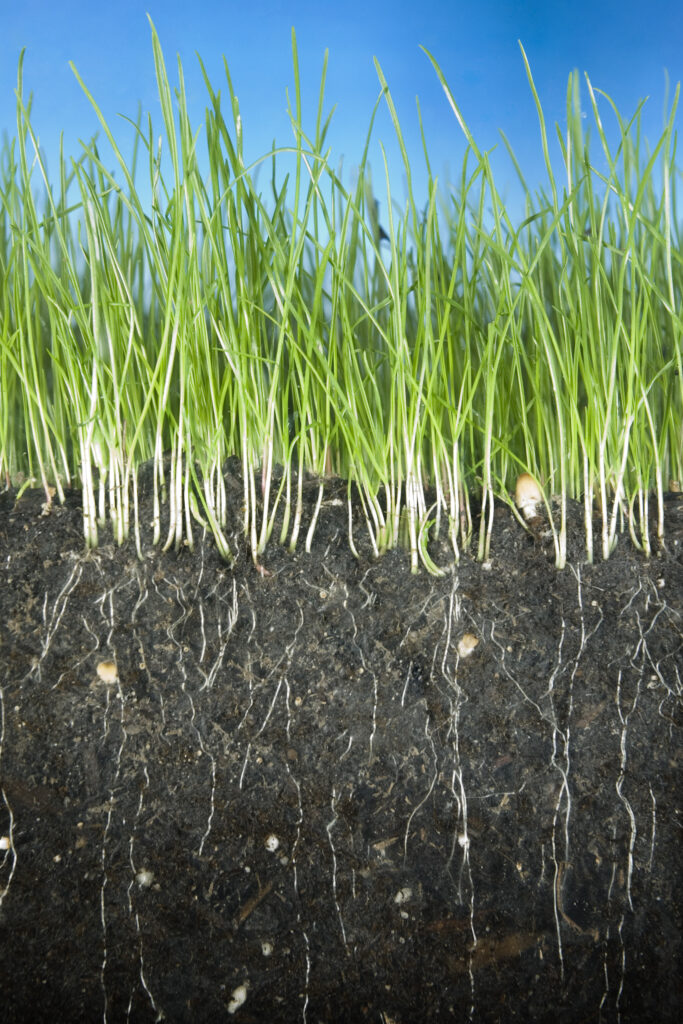
Here’s something that might surprise you: fungi represent one of the most diversified kingdoms on Earth, with estimates reaching up to 12 million species, yet only 150,000 fungal species are currently described. This massive knowledge gap hints at just how much we’re still discovering about these microscopic powerhouses that quietly drive soil health and ecosystem productivity.
The Hidden Network: Understanding Soil Fungi
Soil fungi aren’t just tiny mushrooms waiting to sprout after rain; They’re sophisticated organisms that form extensive underground networks. These thread-like structures, called hyphae, can extend for miles through soil, connecting plants and facilitating nutrient exchange across vast distances. Fungal biomass is particularly important due to its role as a biological bridge. While bacteria excel at breaking down simple organic compounds, fungi are up to 4x more effective at utilizing complex compounds like lignin and cellulose.
Carbon Storage Champions: The Fungal Advantage
Soil stores more carbon than the atmosphere and all living vegetation combined. Fungi play a major role in this process and recent studies have uncovered some fascinating details about their carbon storage capabilities. This challenges previous assumptions about soil carbon dynamics and highlights why fungal biomass matters more than we previously realized.
The Fungal-Bacterial Balance: Why Ratios Matter
Here’s where soil science gets really interesting. It’s not just about having fungi present; it’s about achieving the right balance between fungi and bacteria. Research using RNA sequencing, protein profiling, and isotope tracer techniques has shown that higher fungal-to-bacterial ratios are linked to altered carbon cycling and enhanced soil carbon storage.
The implications extend beyond carbon storage. Fungi contribute to:
Mycorrhizal Magic: Plant-Fungi Partnerships
The symbiotic relationship between plant roots and fungi, specifically mycorrhizal, is incredible. Mycorrhizal fungi form intimate partnerships with a majority of plant species, creating mutually beneficial exchanges that have evolved over hundreds of millions of years. These partnerships work like underground trading networks. Plants provide fungi with carbon-rich sugars produced through photosynthesis. In return, fungi extend the plant’s root system exponentially, accessing water and nutrients from areas the roots could never reach alone.
Environmental Restoration and Fungal Recovery
The importance of fungal biomass becomes even more apparent when examining ecosystem restoration efforts. Desertified system restoration shows that with recovery efforts, plant species richness and aboveground biomass increase significantly, along with improvements in soil organic carbon and total nitrogen. Fungi play a critical role in this restoration process. Their extensive hyphal networks help stabilize soil, reduce erosion, and create the foundation for plant community recovery. As fungal communities reestablish themselves, they facilitate the return of diverse plant species and accelerate ecosystem recovery.

Bucknell University is a private liberal arts college in Lewisburg, Pennsylvania with excellent research facilities and innovative teaching. Students get the opportunity to work closely with professors in their chosen field.
Students in the Biology 203, Integrative Concepts in Biology, laboratory have a unit all about soil. The students visit the Bucknell Farm to learn about the properties of healthy soil. They then pick a location on campus to study. Students study the health of the soil in different conditions, such as soil with native flowers growing compared to soil under a tree. They measure microbial biomass, soil respiration rate, and various other soil properties to determine the overall health of the soil.
“The microBIOMETER® test allows students to quickly and easily measure microbial biomass and the relative amounts of bacteria and fungi in the soil. It is easy to use for non-experts with very quick results! We have measured huge differences in the microbial biomass at locations across Bucknell’s campus and have been surprised to have very high levels of biomass in the grassy areas, too!” – Rebekah Stevenson, Director of Core Course Laboratories – Biology Department


 Amanda Foxon-Hill, a chemist by trade, is working with Mid Lachlan Landcare in the region of NSW, Australia. Mid Lachlan Landcare is a community organization committed to the regeneration of land. Their work includes Regenerative Agriculture, Box Gum Woodland Conservation, Superb Parrot Habitat, Community Gardens, Education & more. Cowra is the main town in their Landcare region which consists of various soil profiles. It is rich in farming land with cropping and grazing.
Amanda designed and performed a soil research project funded by the BCT (Biodiversity Conservation Trust). She took soil samples from farms, conservations and public land across the region to map their soil microbiome. Her goal was to see if she could establish a ’normal’ or ’typical’ range of microbes for each type of landscape and soil.
Amanda looked at grazed vs ungrazed land, mono-cropping vs mixed pasture etc. but that was really secondary to the soil geology and microbe link as there was a short window to complete this round of tests and farm management decisions such as what crop to grow, for instance, requires testing over multiple time points.
As part of the project, Amanda trialed microBIOMETER®. Microbes are essential for soil fertility and almost all plants work cooperatively with microbes to access the nutrients they need to thrive. The relationship between plants and microbes is dynamic; changing with the season, how the land is managed, plant species and life-stage, climate and the soil structure and composition.
“Overall, we feel this project has successfully delivered insights into how the Mid Lachlan region’s soils microbiome functions with respect to landscape features and management decisions although it’s clear there’s still a lot more work to do. Also, after putting the microBIOMETER® through its paces we believe it’s a useful tool for those looking to gain a deeper understanding of their soil. Our advice would be to use the microBIOMETER® or similar microbiology assessment tool/ protocol alongside your existing soil testing tools, at regular intervals to monitor the effect management decisions have on the soil microbiota over time.”
 Welcome to the Becker Elementary School Garden, where every student has their own special space to grow delicious vegetables, herbs, and edible plants for themselves and their families!
With the help of microBIOMETER®’s cutting-edge technology, students are exploring the amazing world of living soil and its secret inhabitants – microorganisms!
These tiny superheroes work together to create a thriving ecosystem, breaking down nutrients and making them available to plants. In the Becker Green Classroom, students are diving deeper into microbiology with miniature microscopes, examining soil, pond water, and compost up close to discover the diverse community of microorganisms living beneath our feet.
“With microBIOMETER®, we can easily test and analyze our garden soils. By making soil science fun and accessible, we’re empowering our students to become the next generation of environmental stewards, conscious of the microscopic world that shapes our planet’s health. Join us on this exciting journey, as we cultivate a love for learning, sustainability, and the incredible world of soil microbiology!”
 Drew Hundelt, Horticultural Specialist and Agroecology Practicioner, has partnered with Gibrill Sesay at Central University in Sierra Leone and microBIOMETER® is playing an important role in their work. Central University is a beautifully maintained college campus nestled in the lush tropical surroundings of Tonkolili in the Northern Provence.
Drew first became acquainted with Gibrill through the United States Department of State’s Community Engagement Exchange Program. The two spent some time at The Urban Farm in Denver facilitating agricultural programming for local neighborhoods. Shortly thereafter, their application to the reciprocal grant was approved which allowed Drew to visit Central University as an agricultural specialist in the Spring of 2023.
Utilizing the microBIOMETER®, Drew is currently working with the university on curriculum development around soil health in agriculture. Their most recent trials analyze how the effects of compost extract using soil from termite hills can bring about exponential growth and drought resistance to crops. The students are using the kit to get real time results of how the fungi to bacteria ratio can be a catalyst to real beneficial change.
“I had the opportunity to collaborate on several lectures and practicums for 30 students in the agricultural department. I spoke on the advantages of regenerative agriculture, community-built systems, and biologically driven yields. What struck me the most was the look in their eyes and how their spirit was teaming with curiosity. I knew then, initiated by the financial constraints of affording a commercial soil diagnostic lab, that I needed to get a biological tool into their hands to foster that curiosity. I am extremely hopeful about what the future holds for Central University, small-holder farmers in Sierra Leone, and West Africa at large. ” Drew Hundelt


Bright Endeavors Now classroom
Bright Endeavors Now (BEN) located in Tanzania, East Africa was started by Biology professor Dr. Regina Herbert, PhD and her husband, an Electrical Engineer, Ricardo R. Herbert, MUP, MBA.
The BEN program provides an environment where budding engineers, designers, scientists and doctors are introduced to concepts in the sciences, technology, engineering, art and math (STEAM), through engaging, developmentally-appropriate activities. Preschool, weekday, weekend and summer programs for children ages 3 to 16 are offered. BEN aspires to travel around the globe providing STEAM education.
Recently, microBIOMETER® was utilized as part of the “Soil and Microorganisms” series in their multi-age science class with students aged 3 to 15. Earlier in the school year, the students established Winogradsky Columns to observe microbial communities. The students then tested the soil with microBIOMETER® to see how specific ratios of fungi and bacteria can have an impact on soil health. In addition, it helped lead to a discussion on how different types of soil can have different ratios which can have an impact on how they grow plants and crops.
We love the microBIOMETER® soil test kit and will continue to test different samples with students as we travel to the US.” – Regina Herbert
David Purdy,, Territory Business Manager at John Deere and Soil Health Specialist, utilized the microBIOMETER® soil test in his study titled Assessment of the mircoBIOMETER Soil Biology Test for Agrovista LTD.
Background:
There is an increased level of interest in soil health and a greater demand for more analytical approaches, in particularly for soil biology, for its assessment from farmers and advisors. This short report reviews the use of a recently developed rapid on-site soil microbial carbon testing tool called microBIOMETER® using a replicated 5 year cover crop experiment.
David Purdy, Territory Business Manager at John Deere and Soil Health Specialist, utilized the microBIOMETER® soil test in his study titled Assessment of the mircoBIOMETER Soil Biology Test for Agrovista LTD.
Background:
There is an increased level of interest in soil health and a greater demand for more analytical approaches, in particularly for soil biology, for its assessment from farmers and advisors. This short report reviews the use of a recently developed rapid on-site soil microbial carbon testing tool called microBIOMETER® using a replicated 5 year cover crop experiment.
Location:
The experiment was carried out at the location of the Agrovista LTD. trials site is near Lamport in Northamptonshire about 8 miles north of Northampton in the UK. It has a longitude of 52.372234, and latitude of -0.874273. The field site history is of arable farming rotations on a slightly southerly sloping topography.
“The tests, although time consuming, provided an “in field” test that when conducted well seems to suggest it is a reliable, consistent, replicable, and relatively simple test to evaluate soil biological activity.” – David Purdy

 Andrew Turnbull is the owner of SouthWest Agronomy Ltd (SWA) located in Tavistock, England. His company offers advisory and consultancy services to golf courses and sports turf facilities.
One issue the company faced was how to prove to their customers that their recommended treatments were actually having a positive influence on the soil microbes. Other than the obvious visual effects of the quality of the playing surface, which can often be open to interpretation, Andrew wanted to prove that other factors have improved performance such as extra or different maintenance operations. Andrew found regular soil microbial analysis to be expensive with only a few laboratories locally performing accurate testing.
“microBIOMETER® changed the game!” – Andrew Turnbull
Now, in addition to comprehensive nutrient and microscopic analysis, the company incorporates regular microbial testing with microBIOMETER® into their program. This enables them to give their clients confidence that they are implementing changes that not only have a positive visual effect, but a measurable and direct one as well.
About SouthWest Agronomy Ltd (SWA).SWA focuses on the little understood aspect of how turfgrass plants interact with the rootzone biology and how the plant’s metabolism is affected by biotic and abiotic stresses. When a turfgrass plant is healthy it excretes carbohydrates, proteins and other exudates that feed microbes. This increases mineralization of nutrients, enhances disease protection, and causes organic matter recycling. SWA’s Bio Nutrition Program restores the balance between the plant and soil microbes which is lost when turfgrass management relies on chemical fertilizers, and/or is under continual stress from maintenance operations, and/or has less than optimum environmental conditions (e.g. heat, cold, shade), and regular use by players.
Andrew Turnbull is the owner of SouthWest Agronomy Ltd (SWA) located in Tavistock, England. His company offers advisory and consultancy services to golf courses and sports turf facilities.
One issue the company faced was how to prove to their customers that their recommended treatments were actually having a positive influence on the soil microbes.