
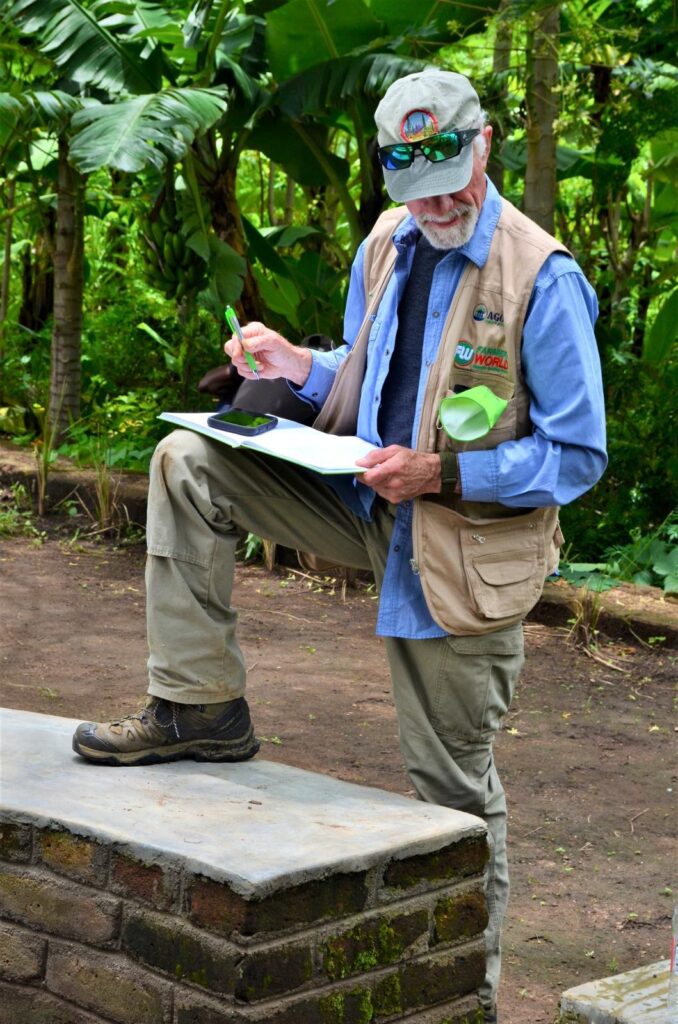
Fred Way has joined forces with APN – the Agroforestry Promotion Network which was founded by Roland Frutig and Lucky Mukasa. He also collaborates with soil stewards and farmers from Kenya, Malawi, Uganda, India and Switzerland.
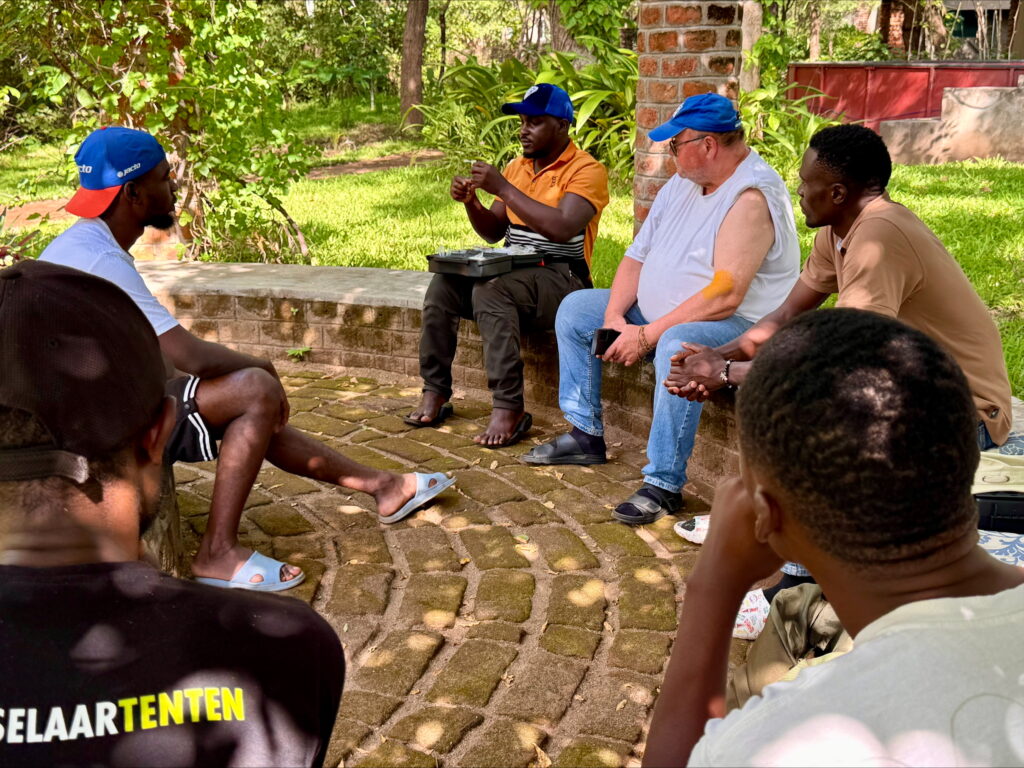
The group travels throughout Africa to Uganda, Egypt, Nigeria, etc. They have educational centers in Malawi and Uganda. Here they host classes several times a year covering various soil practices to assist local growers by enhancing their farming techniques and improvimg forest function. By utilizing microBIOMETER® in these classes, they are able to highlight the importance of soil biology as well as demonstrate how changes in microbial biomass and fungal to bacterial ratio have positive effects on soil.
Whenever they can, they supply farmers with a microBIOMETER® test kit to allow them to easily test and track their soil’s health. While they are still in the beginning stages, their goal is to be able to provide local areas with kits since they are used to determine how native, natural forests function as well.
Fred performed microBIOMETER® testing in a logged forest that was a primary source for rubber in the late 1800’s until tthe early 1900’s. Currently, locals are removing all dead wood for fuel which is creating a loss of food at the trophic level. They use Indigenous microbial organisms (IMOs) in manure and urine (mostly from cows), molasses and other regenerative practices to stimulate the soil. They have discovered that by using these materials, they are able to kickstart the regenerative system. microBIOMETER® has demonstrated that these somewhat unconventional materials are increasing fungal levels over time while bare soil that previously wasn’t producing is now showing signs of life. Their goal is to emulate what’s happening in the forest for their agriculture food production system.
“The affordability and compatibility of microBIOMETER® as well as the real-time results make it easy to understand and track results over time and see improvements quickly. The addition of microBIOMETER® PRO’s advanced calculations and moisture adjustments are a good addition to the test,” – Fred Way
 Microbial biomass (MB) is the best single indicator of soil health (Doran, 2000). Microbes feed and protect plants, build soil structure which prevents erosion, increase water holding capacity, and build soil organic matter (SOM). MB is low in any situation that is harmful to plant growth (and vice versa) and protects against pathogens, thereby reducing the need for pesticides. MB can predict success before plant outcome. The Fungal:Bacterial ratio (F:B) of the MB provides crucial information regarding colonization by Arbuscular Mycorrhizal Fungi (AMF), and the recycling metabolic processes of saprophytic fungi (SpF).
Soil stewards all over the world are seeking to understand the microbial levels in their soil and the ratio of fungal to bacterial life. The higher the microbial biomass, the more nutrients will be available to plants naturally, decreasing or eliminating the need for chemical fertilizers. Higher fungal to bacterial ratios are critical for building soil structure that prevents erosion and runoff off of pollutant chemicals while building moisture holding capacity of the soil and sequestering carbon.
Soil health is fast becoming one of the most important factors in agriculture and in the growing efforts to improve the earth’s stock of agricultural land. Farmers, industry, and environmentalists are looking for cost-effective and reliable ways to measure soil health and to assess impacts of progressive changes to soil and harvest management.
Testing soil in homogeneous sections at similar stages of the growth cycle can set a baseline for microbial biomass and fungal to bacterial ratio. That baseline can be used to assess how different stewardship practices are impacting the soil and allow for refinement to soil management plans and show soil health improvement over time. While every soil steward’s situation is unique, microBIOMETER® can help measure, follow, and assess efficacy of improvement to soil health.