
You can till your soil, water it, and fertilize it right on schedule, and yet your soil can still struggle where it matters most: below the surface. Soil microbial activity is the real story of soil health, and most growers never get to read it. We built microBIOMETER® because guessing shouldn’t be part of farming.
Chemical tests tell you what nutrients are sitting in your soil today. They don’t tell you whether your soil can actually cycle those nutrients tomorrow. That job belongs to bacteria and fungi living in the ground beneath your feet.
What Is Soil Microbial Activity?
Soil microbial activity refers to how alive and active the bacteria and fungi in your soil are. These microbes break down organic matter, fix nitrogen, and build the structure that lets roots breathe and water move. Research shows that microbial biomass is the leading indicator of soil health, ahead of pH or nutrient panels alone. A soil packed with beneficial microorganisms can fix nutrients naturally, improve plant immunity, and hold water more efficiently. That means fewer inputs and stronger yields over time.
Why Chemical Tests Alone Miss the Bigger Picture
A standard soil test measures nutrients like nitrogen, phosphorus, and potassium at one moment in time. It says nothing about whether your soil ecosystem can keep producing those nutrients season after season.
Living soil functions like a factory. Chemical tests check the warehouse inventory. Biological testing checks whether the machines are actually running.
Here’s what gets missed when you skip biological testing:
How to Measure Soil Microbial Activity Without a Lab
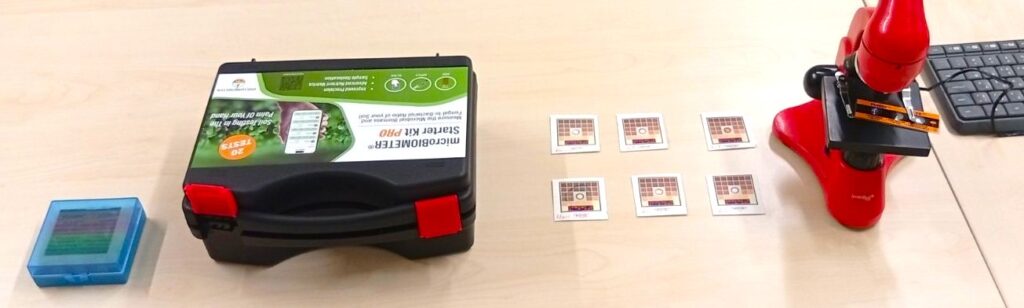
The microBIOMETER® lets you measure soil microbial activity in about 20 minutes, right where you collect your sample. Instead of sending soil to a laboratory, the test uses a patented process that extracts microbes from the soil. As the heavier soil particles settle, the soil-colored
microbes remain suspended in the liquid. A small sample of this suspension is then placed on a test card and scanned using the microBIOMETER® smartphone app, available for both iPhone and Android.
The app analyzes the color intensity of the microbial suspension against a built-in reference on the test card to provide lab-grade measurements of microbial biomass and the fungal-to-bacterial (F:B) ratio.
Rather than serving as a one-time test, microBIOMETER® is designed to help you track changes over time. By testing the same field throughout the season or comparing different fields under different management practices, you can see whether your soil health strategy is increasing microbial biomass and improving the fungal-to-bacterial balance. Consistent sampling methods and testing conditions help ensure the most reliable comparisons.
Indicators of Healthy Soil Biology You Can Actually Track
A biologically healthy soil shows specific, measurable signs. Growers using biological soil health assessment regularly report better structure, improved water retention, and more consistent yields across seasons.
| Indicator | What It Tells You |
| High microbial biomass | Strong nutrient cycling capacity |
| Balanced fungal to bacterial (F:B) ratio | Soil suited to your specific crop |
| Consistent biomass across retests | Management practices are working |
| Rising biomass trend | Soil resilience is improving |
We recommend retesting every few weeks during active growing season. One test gives you a snapshot. Frequent retesting gives you a trend, and trends are what actually guide decisions.
Tracking Whether Your Soil Management Practices Are Working
You added compost. You reduced tillage. You switched to cover crops. But did any of it move the needle on soil microbial activity?
This is where most growers get stuck. Without measurable biological insights, you’re left guessing based on how the soil looks or feels. microBIOMETER® lets you test before and after any management change, so you can see the actual impact on microbial biomass instead of hoping for the best.
Quick management effectiveness checks matter because inputs cost money. Knowing which amendments genuinely boost your soil microbiome means you stop wasting budget on ones that don’t.
Building Regenerative Agriculture Outcomes That Last
Regenerative agriculture depends on one thing above all: living soil that keeps improving instead of degrading. Monitoring soil biology over time helps you track carbon storage progress and long-term soil resilience, not just this year’s harvest.
We work with growers, agronomists, and researchers who want proof their regenerative practices are working. microBIOMETER® gives that proof through consistent, affordable, on-site testing that fits into any season’s workflow.
Improving soil microbial activity isn’t a one-time fix. It’s an ongoing relationship between what you do to your soil and what your soil does back for you.
The Bottom Line on Soil Biology
Soil health isn’t just chemistry. It’s biology, and biology needs to be measured directly to be understood. We built microBIOMETER® so growers, consultants, and researchers everywhere can finally see what’s happening beneath the surface, without waiting weeks or spending a fortune on lab work.
Frequently Asked Questions
What does low soil microbial activity mean for crop yield?
Low soil microbial activity usually means poor nutrient cycling, weaker plant immunity, and reduced water retention. Crops in such soil often need more fertilizer to achieve the same results, since the natural biological processes that support root health and nutrient uptake are underperforming.
How often should I test soil microbial biomass?
Most agronomists recommend testing every 4 to 6 weeks during the growing season, especially after applying amendments. Frequent retesting with microBIOMETER® reveals trends in microbial biomass, helping you confirm whether management changes are improving soil biology or having little effect.
Can soil microbial activity be improved quickly?
Soil microbial activity can shift within weeks after changes like reduced tillage, cover cropping, or compost application, though major improvements typically take one to two full growing seasons. Consistent, science-backed practices paired with regular biological testing produce the most reliable long-term gains.
Is fungal to bacterial ratio the same for every crop?
No, fungal to bacterial ratio needs vary by crop type. Row crops often perform well with more bacterial-dominant soil, while perennials and forests typically thrive with higher fungal presence. Testing your specific ratio helps you match soil biology to what your crop actually needs.
Does tillage always harm soil microbial health?
Frequent, deep tillage generally disrupts fungal networks and reduces microbial diversity over time. Occasional, shallow tillage causes less damage, especially when paired with organic matter additions. Reduced or no-till practices, combined with regular biological testing, tend to support stronger long-term microbial biomass.
Soil sampling mistakes are more common than most researchers and agronomists like to admit. These mistakes don’t just waste time and money but they also expose a deeper issue in traditional soil testing workflows. Even when sampling is done correctly, delays between collection and analysis can alter biological activity, particularly in microbiome testing, leading to results that don’t fully reflect real field conditions.
microBIOMETER® is a soil testing tool designed for researchers, farmers, and soil scientists who rely on accurate, field-relevant soil health data to make meaningful decisions.
In this blog, we’ll cover:
The Most Common Field-Level Soil Sampling Mistakes
Most bad soil data starts in the field, not the lab.
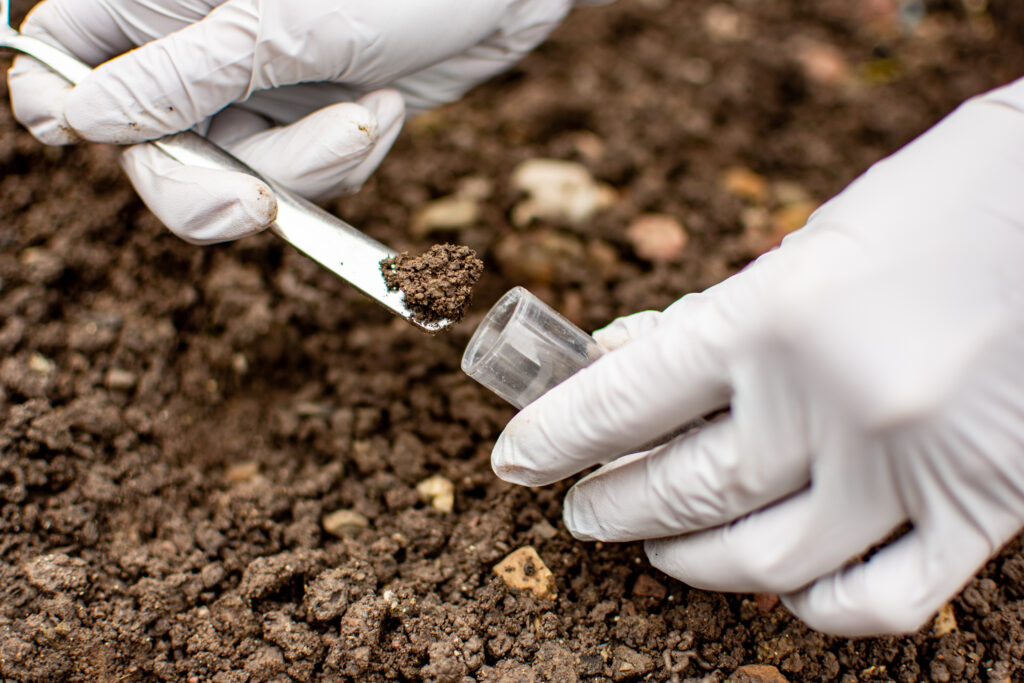
Sampling at the wrong depth is one of the most frequent errors. Different analyses require different depths. Surface nutrient analysis typically samples the top 0 to 15 cm. Subsoil analysis goes deeper. Microbiome and biological activity analysis often focuses on the very top layer. Using the same depth for all purposes produces misleading data.
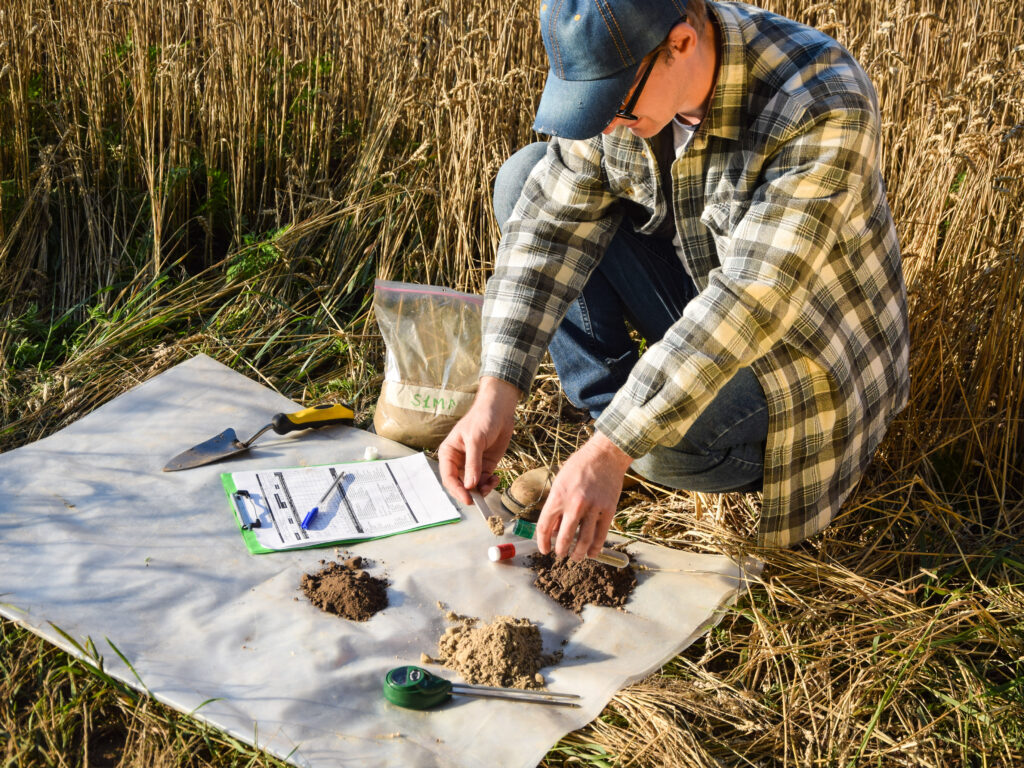
Composite sample bias happens when you’re combining cores from multiple points within a field or sampling area. If you collect more cores from one area type than another, or if your sampling points aren’t genuinely representative of the area’s variability, your composite doesn’t reflect the true average.
Sampling at the wrong time matters more than most people account for. Soil moisture, temperature, and recent land management activity all affect the data you get. Comparing samples taken at different times of year or different stages of a crop cycle introduces variability that isn’t real.
Contamination from equipment is a constant risk. Residue from previous samples, lubricants, rust, or residue from cleaning products on sampling tools can alter test results, particularly for microbiological analyses.
Even when field sampling is executed correctly, one major variable remains difficult to control: the time between sampling and analysis. For microbiological testing, this delay allows biological processes to continue, meaning the sample you analyze may no longer represent the conditions present at the time of collection.
Lab Errors in Soil Testing: What Happens After the Sample Leaves the Field
Getting the soil sample into the right container at the right time is just the beginning.
Improper storage and transport between collection and analysis allows biological activity to continue, particularly for microbiological tests. For accurate microbiome soil analysis, samples need to be processed quickly or stored under conditions that halt biological change.
Mislabeled samples are more common than anyone admits and have obvious consequences for data reliability.
Subsampling errors in the lab, when the subsample taken for analysis isn’t representative of the bulk sample you submitted, introduce variance that isn’t from the field.
Moisture content variation affects nutrient analysis results because many results are reported on a dry weight basis. If moisture isn’t measured and accounted for correctly, your reported concentrations are off.
Cross-contamination in the lab can occur between samples or from equipment, particularly for trace element and microbiological testing.
Bridging the Gap Between Soil Sampling and Test Results
One big challenge in soil microbiome testing is the gap between when a sample is collected and when it is analyzed. During this time, biological activity continues, which means the results may not fully reflect the actual in-field conditions at the time of sampling.
MicroBIOMETER® is a low-cost, 20-minute, on-site soil test that measures:
Using smartphone-based analysis, it allows users to generate results directly in the field and eliminates delays associated with lab testing and reducing the risk of biological changes during transport.
Because results are instant, you can retest as often as you need to, which turns out to be really valuable when you’re trying to understand how your soil responds to different management practices over time. Instead of piecing together a picture from occasional lab reports, you can actually track trends and make decisions based on what’s happening right now.
How Field-Based Testing Is Changing Soil Health Measurement
Traditional soil testing has a fundamental problem: by the time your sample reaches the lab and gets analysed, the biology has already started to change. Microbial activity doesn’t pause for shipping. Even with careful handling, that time gap introduces variability you can’t fully control.
microBIOMETER® takes a different approach as you can test in the field, get results in minutes, and capture soil conditions as they actually are.
That shift makes a real practical difference:
More accurate data
Without the delay between sampling and analysis, your results reflect what’s actually in the soil, not what changed during transport or storage.
Faster decisions
Instead of waiting days or weeks for lab results, you have actionable information in minutes. If something needs adjusting, you can act on it straight away.
Regular monitoring, without the cost
The test is quick and affordable so that retesting frequently becomes practical. That’s how you start to see patterns, how your practices are actually affecting microbial activity over time.
Fewer chances for error
Fewer steps between sample and result means fewer opportunities for contamination or handling mistakes to skew your data.
Good sampling protocols still matter field tools don’t change that. But combining solid protocols with something like microBIOMETER® gives you soil health data that’s more reliable, more consistent, and a lot more useful.
Start Measuring Soil Health in Real Time
If lab delays are slowing down your decision-making, microBIOMETER® gives you a faster, more practical way to understand what’s happening in your soil, right where you’re standing.
Explore how microBIOMETER® can fit into your soil health strategy.
Frequently Asked Questions
How is microbiome soil testing different from traditional soil testing?
Traditional testing looks at the chemistry such as nutrients and pH and usually involves sending samples to a lab. Microbiome testing is measuring something different entirely: the biological activity in your soil, like microbial biomass and fungal-to-bacterial balance. That biological data is also far more sensitive to time and handling, which is why being able to test in the field immediately makes such a difference.
Why does timing matter so much in soil microbiome analysis?
Microbial activity doesn’t stop when you collect a sample. By the time a lab-based sample gets analysed, the biology has already shifted, sometimes significantly. Testing in the field removes that delay and gives you results that actually reflect what’s in your soil at that moment, not what it looked like hours later.
Can I track changes in soil health over time with repeated testing?
Yes, and honestly, this is where field-based testing really earns its keep. Because it’s quick and cost-effective, regular retesting becomes practical rather than aspirational. Over time, that consistency lets you see real trends: how your soil is responding to what you’re doing, and where adjustments are actually making a difference.
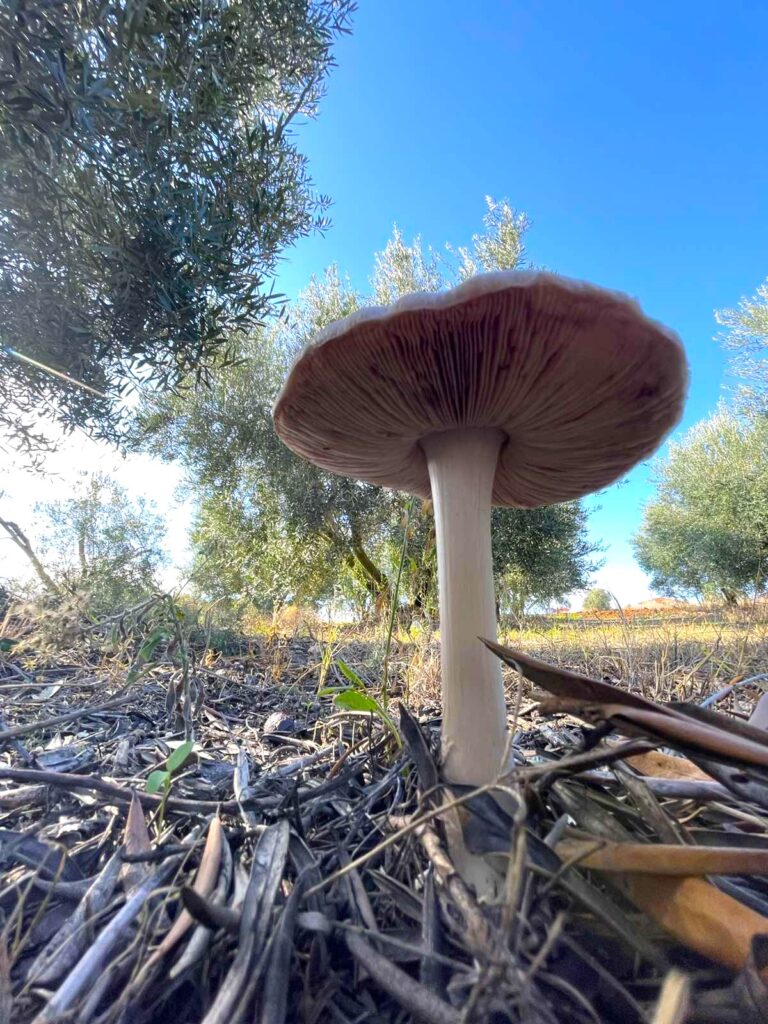
Dimitris Mameletzis is a physics educator and olive grower at Ελαιώνες Μαμελετζή (Mameletzis Olive Groves) in Greece. Dimitris’ project, Terra Vitalis, focuses on transitioning conventional olive groves into self-sustaining, regenerative ecosystems. The company specializes in high-phenolic olive oil (Halkidiki and Koroneiki varieties) by prioritizing soil health over chemical inputs.
Dimitris has been utilizing microBIOMETER® as a primary tool to scientifically validate their regenerative practices and monitor the impact of Effective Microorganisms (EM) inoculation in the soil and foliage. Their methods include organic mulching using shredded olive branches and local flora (like Taraxacum) and attapulgite soil amendments to enhance water retention in drought-stressed (dry-farmed) groves.
microBIOMETER® results have shown a significant increase in microbial biomass in their Terra Vitalis plots compared to conventional plots. This biological activity is directly linked to the exceptional health of their trees—visible, deep green foliage, zero fungal issues (Cycloconium), and high polyphenol counts (Oleocanthal) in their olive oil, which carries an EU Health Claim. Dimitris enjoys having the ability to monitor soil microbial biomass in real-time as they transition from conventional to chemical-free olive farming.
Dimitris will continue to use microBIOMETER® for on-site monitoring and comparative analysis between different olive groves. Specifically, comparing the microbial biomass in irrigated “transition” plots versus dry-farmed “Terra Vitalis” plots to monitor in real-time how soil biology responds to regenerative interventions.
“The main benefit of microBIOMETER® is the ability to quantify “soil health,” which was previously invisible. It helps us make data-driven decisions on where to apply more organic matter and provides tangible proof to our customers that our regenerative practices actually work. It has bridged the gap between theoretical physics/biology and practical field application. Interestingly, we found that even in dry-farmed (non-irrigated) groves, microbial activity remained resilient during heatwaves, As a physicist, I view this as a transition from a high-entropy, input-dependent system to a low-entropy, self-organizing biological engine.” – Dimitris Mameletzis
Healthy soil contains billions of tiny living organisms that farmers can’t see with their eyes. Soil biology impacts everything from how well crops grow to how much food farmers harvest each season. Understanding these microscopic helpers can transform struggling fields into productive farmland across the USA.
The Living World Beneath Your Feet
Soil is a complex ecosystem filled with bacteria, fungi, protozoa, and countless other microorganisms. These tiny creatures work together to create what scientists call microbial biomass, which essentially means the total mass of all living things in the soil. These microbes break down dead plant material, release nutrients, and protect roots from diseases.
Farmers who ignore soil biology often struggle with poor yields despite using expensive fertilizers. The problem isn’t always a lack of nutrients but rather a lack of living organisms to make those nutrients available to plants. Healthy soil microbes act like tiny factories that process raw materials into forms plants can actually use.
How Microbes Feed Your Crops
● Plants need nitrogen, phosphorus, potassium, and many other nutrients to grow strong and produce good yields. Chemical fertilizers provide these elements, but plants can’t always absorb them efficiently without help from soil biology.
● Some bacteria form nodules on roots as an exchange site where they give the plant fixed nitrogen and receive carbohydrates form the plant. Other types of bacteria are free-living and can fix nitrogen without directly living on the roots.
● Microbes also produce natural chemicals that stimulate plant growth. These substances work like vitamins for plants, boosting their immune systems and helping them resist stress from drought, heat, or pests.
Root Development Starts With Biology
Plant roots don’t grow alone in the soil. They partner with fungi called mycorrhizae that attach to root surfaces and extend deep into the ground. Healthy root development depends heavily on this partnership. The fungi gather water and nutrients from far away and deliver them to plant roots.
In return, plants share sugars they make through photosynthesis with their fungal partners. Soil bacteria also cluster around plant roots in areas called the rhizosphere. They create a living shield that can help keep plants healthy without requiring chemical treatments.
Testing Your Soil’s Living Community
Farmers across the USA now test their soil biology regularly to track improvements. Traditional soil tests only measure chemical nutrients, missing the crucial living component that drives soil health.
Modern testing methods allow farmers to measure microbial biomass quickly without sending samples to distant laboratories. The microBIOMETER® Soil Test Kit takes just 20 minutes and works right in the field on fresh soil. This real-time data helps farmers see if their management practices actually improve soil life.
Building Soil Biology Takes Time
Improving soil biology doesn’t happen overnight. Microbes need food, water, and proper conditions to multiply. Farmers build populations gradually through practices that support microbial life rather than destroy it.
Adding organic matter like compost or cover crops feeds soil organisms. Living roots in the ground year-round provide constant food for microbes. Regenerative agriculture practices focus specifically on building soil biology.
Soil biology impacts every aspect of farming, from root development to final harvest. Farmers who nurture the living community in their soil see stronger plants, better yields, and lower input costs. Understanding and supporting soil microbes isn’t just good science, it’s good business for American agriculture.
Getting your soil test results back feels exciting. You hold numbers that reveal what is happening beneath your feet. But staring at those numbers can feel confusing if you do not know what they mean or how to use them.
DIY soil testing has made understanding soil health accessible to everyone. Instead of sending samples to distant laboratories and waiting weeks, people can now test their soil on-site and get immediate answers. This guide will help you understand those results and use them to improve your land.
Importance of Testing for Microbial Biomass
Many people make changes to their soil based on guesswork. They add fertilizers, compost, or other amendments, hoping for improvement. Traditional soil tests measure chemical properties like nitrogen, phosphorus, and pH levels through various methods. These numbers provide useful information but miss the biological side of soil health. Living organisms in the soil drive nutrient cycling, water retention, and plant health.
Microbial biomass encompasses all the living organisms in your soil sample. This includes bacteria, fungi, and other microscopic creatures. Think of it as counting the population in an underground city.
Higher microbial biomass numbers usually indicate more biological activity, which can translate to better plant growth, reduced need for fertilizers, and improved resistance to drought. Lower numbers suggest the soil needs help building its living community.
Understanding the Fungal to Bacterial Ratio
The second key measurement is the fungal to bacterial ratio. Soil contains both types of organisms, but different plants prefer different balances. This ratio helps determine what type of ecosystem exists underground.
Bacteria thrive in disturbed soil and support annual plants like vegetables, grains, and grasses. These organisms multiply quickly and break down fresh organic matter rapidly. Gardens and agricultural fields typically show higher bacterial populations.
Fungi prefer undisturbed environments and support perennial plants like trees, shrubs, and native grasses. Fungal networks extend through soil, connecting plants and moving nutrients over long distances. Forest soils naturally contain more fungi than bacteria.
How to Read Your Numbers In Soil Testing?
Real-time soil testing provides immediate data, but understanding context makes those numbers meaningful. The same soil can show different results depending on season, moisture, and recent weather conditions.
Spring and fall typically show higher microbial activity than summer or winter. Warm, moist conditions help microorganisms thrive. Extreme heat or cold slows their activity. Compare results from the same season to track true changes.
What Good Results Look Like In Soil Testing
Healthy agricultural soil typically shows microbial biomass levels above 600 micrograms per gram. Garden soil often shows even higher numbers because gardeners regularly add compost and organic matter and gardens can be managed more frequently due to their size. Really excellent soil can reach 1000 or higher. These numbers indicate strong biological activity supporting plant growth. However, this is largely dependent several factors including your climate, region, soil type and texture.
Conclusion
Soil microbial biomass testing provides powerful insights when interpreted correctly. These numbers reveal the health of the underground ecosystem supporting all plant growth. Understanding and acting on this information creates healthier, more productive land that requires fewer external inputs while producing better results.

Fred Way has joined forces with APN – the Agroforestry Promotion Network which was founded by Roland Frutig and Lucky Mukasa. He also collaborates with soil stewards and farmers from Kenya, Malawi, Uganda, India and Switzerland.
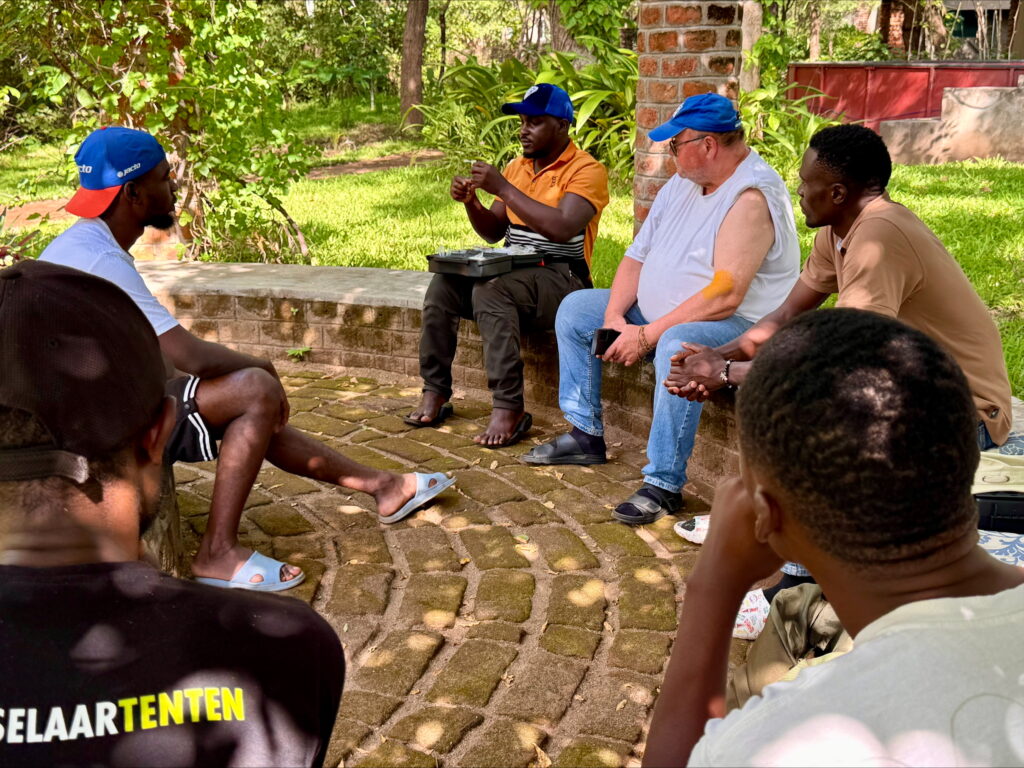
The group travels throughout Africa to Uganda, Egypt, Nigeria, etc. They have educational centers in Malawi and Uganda. Here they host classes several times a year covering various soil practices to assist local growers by enhancing their farming techniques and improvimg forest function. By utilizing microBIOMETER® in these classes, they are able to highlight the importance of soil biology as well as demonstrate how changes in microbial biomass and fungal to bacterial ratio have positive effects on soil.
Whenever they can, they supply farmers with a microBIOMETER® test kit to allow them to easily test and track their soil’s health. While they are still in the beginning stages, their goal is to be able to provide local areas with kits since they are used to determine how native, natural forests function as well.
Fred performed microBIOMETER® testing in a logged forest that was a primary source for rubber in the late 1800’s until tthe early 1900’s. Currently, locals are removing all dead wood for fuel which is creating a loss of food at the trophic level. They use Indigenous microbial organisms (IMOs) in manure and urine (mostly from cows), molasses and other regenerative practices to stimulate the soil. They have discovered that by using these materials, they are able to kickstart the regenerative system. microBIOMETER® has demonstrated that these somewhat unconventional materials are increasing fungal levels over time while bare soil that previously wasn’t producing is now showing signs of life. Their goal is to emulate what’s happening in the forest for their agriculture food production system.
“The affordability and compatibility of microBIOMETER® as well as the real-time results make it easy to understand and track results over time and see improvements quickly. The addition of microBIOMETER® PRO’s advanced calculations and moisture adjustments are a good addition to the test,” – Fred Way
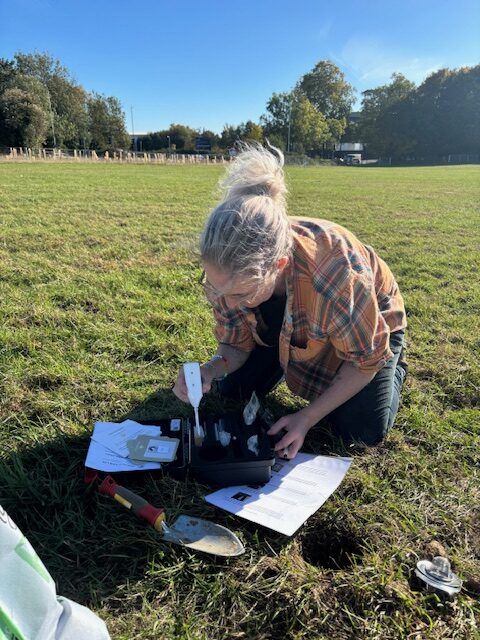
Recently, the Soil Association team was at Woodoaks Farm in Hertfordshire, England collecting soil samples as part of the AI 4 Soil Health project (AI4SH). Madeleine Silberberg, Project Coordinator, coordinates 13 pilot sites across the continent in partnership with leading European institutions. These sites, covering 11 pedoclimatic regions, were selected based on distinctive soil qualities. The team are using advanced measurement techniques, generating new insights into the health of Europe’s soils, testing the assumptions in their models, and helping determine the best monitoring tools for the future.
Soil Association Farming Advisor, Karen Fisher, shares her experience using microBIOMETER® on this project.
“microBIOMETER® turned out to be a genuinely exciting addition to the toolkit. The first test took me a little while, carefully following the instructions step by step, but once I got into the rhythm the process was surprisingly straightforward. The longest part was waiting for the sample to develop but that slotted in nicely while we collected bulk density samples and soils for lab analysis.
I did have a small hiccup with scanning the first card, but I think my app might have been on the wrong mode, but after that everything worked perfectly. Each scan felt a bit like opening a present. I found myself looking forward to seeing what the next result would show.
It was fascinating to see the different patterns emerging across woodland, permanent grassland, conservation fields and compost. Some results weren’t quite what you might expect, for example, a woodland showing a lower fungal: bacterial ratio than a long-term grass field. It is a reminder that context matters: soil biology reflects both current conditions and land use history, and sometimes regeneration takes time.
These kinds of rapid, field-based tools do not replace lab analysis, but they bring soil life into focus in a way that is both practical and accessible. Over time, repeating these tests across seasons and management practices will help us build a richer picture of soil health and feed into the development of different indicators.”
Senior Farming Advisor Josiah Judson, “‘It was great to be out in the field making sure the tools we’re developing actually make sense on the ground and can support different users. It’s an ambitious goal to map these things across so many different landscapes, but the more data we can get, the better!”
Remember when you needed expensive equipment just to know what’s happening in your soil? Well now that same device you use to scroll social media and read the news can analyze soil health with lab-quality precision.
The Science Behind Your Pocket Soil Lab
Your smartphone possesses something laboratories have relied on for decades: sophisticated optical sensors and powerful processing capabilities. Modern smartphones can detect color variations, light intensity, and chemical reactions through their cameras and built-in sensors. When paired with the right testing reagents and apps, these everyday devices transform into legitimate soil analysis tools.
The principle is surprisingly straightforward. Soil samples react with specific chemical reagents, producing color changes that correspond to different nutrient levels, pH values, or biological activity. Your phone’s camera captures these color variations, while specialized algorithms interpret the data and provide instant results.
What Your Mobile Soil Lab Can Actually Measure
You might wonder what kind of soil data you can realistically expect from smartphone-based testing. The capabilities are more extensive than you’d think:
Real-Time Results That Actually Matter
The game-changer isn’t just the technology—it’s the speed. Traditional soil testing means collecting samples, shipping them to a lab, and waiting days or weeks for results. And by then, growing conditions and microbial communities may have changed completely. Smartphone-based soil lab technology delivers results in minutes, not days. This real-time capability transforms how you can manage your soil health. And the microBIOMETER® can help you do just that.
Notice your tomatoes looking yellow in mid-July? Test the soil immediately and adjust your fertilization strategy that same afternoon. Planning fall amendments for your lawn in Texas? Test multiple spots across your property in a single morning and create a targeted improvement plan.
Getting Started: Your First Mobile Soil Analysis
Setting up your smartphone as a soil lab is simpler than you might expect. The microBIOMETER® includes testing reagents, measuring tools, and a smartphone app that guide you through the entire process step by step. You’ll collect a representative soil sample, mix it with the provided reagents, and use your smartphone’s camera to capture the resulting color changes. The app then analyzes the images and provides detailed reports about your soil’s condition. The testing process is quick and you can see results in 20 minutes.
The Technology Revolution Happening Now
All-in-one smartphone-based devices are becoming preferable for agricultural soil analysis, enabling users to complete self-assessments about soil quality and receive performance reports with actionable insights.
The implications extend far beyond individual gardeners. Extension services at universities across the United States are incorporating smartphone soil testing into their educational programs. Community gardens in both rural and urban areas are using these tools to optimize their growing strategies and share soil health data among members.
Urban gardening isn’t just about growing tomatoes in a small closet. It’s about understanding the complexity of soil microbes in unconventional spaces and utilizing new methods that make city gardening not only possible, but also incredibly rewarding.
Plants with healthy microbial communities in their root zones tend to grow more vigorously and are better equipped to withstand stressors such as drought, pests, and diseases. In urban environments where plants face challenges like air pollution, heat islands, and limited space, this microbial support system becomes even more crucial.
Urban soil faces unique challenges that rural farmland doesn’t necessarily encounter on a daily basis. You’re dealing with:
Start with Quality Organic Matter
Your soil microbes are essentially composting machines, but they need fuel. Add compost, aged manure, or leaf mold regularly. These organic materials provide the carbon and nutrients that feed your microbial community. In cities like Portland and Seattle, many neighborhoods now offer community composting programs—take advantage of them!
Test and Track Your Progress
Understanding your soil’s microbial health doesn’t have to be guesswork. Modern soil testing technology allows you to monitor microbial biomass and the fungal-to-bacterial ratio right from your balcony or rooftop garden. This data helps you understand whether your soil management practices are actually working.
Minimize Chemical Disruption
Synthetic pesticides and fertilizers can disrupt your carefully cultivated microbial community. Instead, focus on building soil biology through organic amendments and natural pest management strategies. Beneficial soil microbes perform fundamental functions such as nutrient cycling, breaking down crop residues, and stimulating plant growth.
A recent study reported by the NIH reveals an intriguing connection between gardening and human health that goes beyond fresh vegetables and exercise. It found that frequent exposure to environmental microbiota, especially through skin to soil contact, diversifies commensal microbiota, enhances immune modulation, and ultimately lowers the risk of immune-mediated diseases.
As more Americans embrace urban gardening & soil health practices, we’re seeing innovations that make microbial monitoring and management more accessible than ever. Whether you’re growing herbs on a fire escape in Brooklyn or maintaining raised beds in a Phoenix community garden, understanding and nurturing your soil’s microbial community will help you grow healthier plants while potentially benefiting your own well-being.
Imagine this: The earthy scent of microbes breaking down leaves in the soil fills the air. Your harvest is complete, the season is winding down, and you’re likely looking forward to a well‑deserved break. But before you prepare for winter, seize the opportunity to assess the health of the microbes in your soil. It will pay off next spring! Testing microbial biomass carbon (MBC) and fungal-to-bacterial (F: B) ratios during autumn sets the stage for healthier, more resilient soils next spring. This proactive step is in your hands, and it’s a crucial one.
Here’s why autumn is the sweet spot for measuring soil biology:
1. Post-harvest tests show the real impact of your management
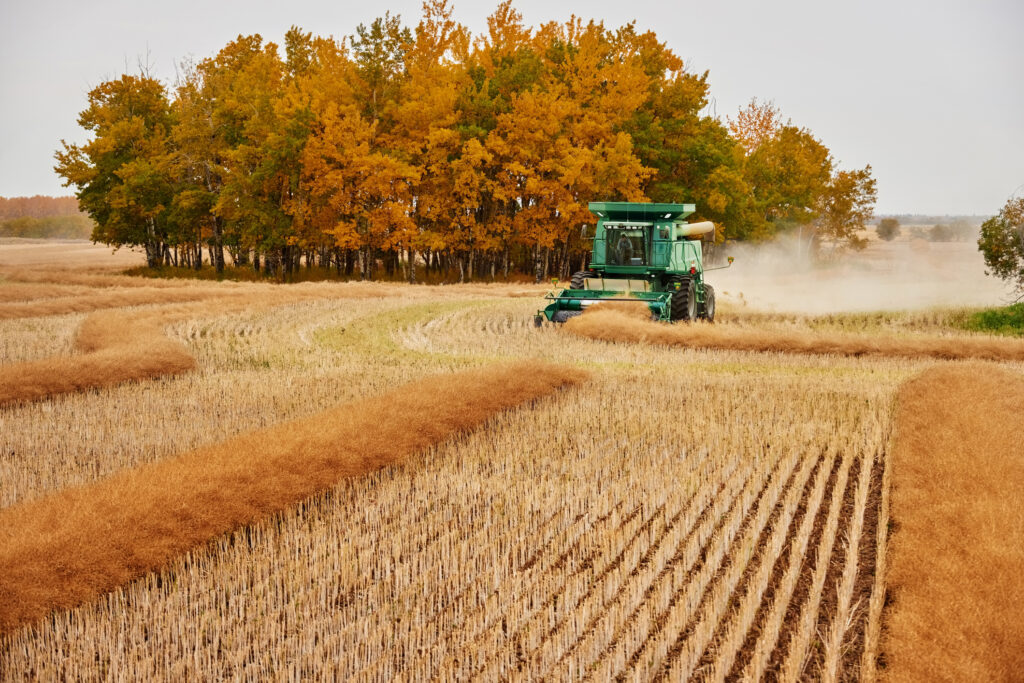
Sampling during autumn captures the “end-of-season report card” for your soil. It reflects how crops and cover crop management shaped microbial life through the growing season. Studies by Cornell University show post-harvest data shows differences between treatments, with diverse cover rotations supporting higher microbial activity compared to standard fallow fields. In other words, autumn tests provide a clear picture of how your decisions paid off biologically.
2. Results guide action plans for the winter
Nebraska Extension notes that low MBC signals low biological activity and carbon availability—exactly the type of challenge that can be addressed when you act ahead of spring. Autumn is your window to respond before soils go quiet in winter. If MBC trends low, you can jumpstart recovery with practices like:
3. Amendments need time to work
If you know your soil is acidic and requires lime, autumn or manure additions, autumn is the best time to make applications and alterations to the microbial ecosystem. Amending now gives the soil several quiet winter months to equilibrate, ensuring pH is in the right range for nutrient availability and microbial activity by the time you plant again.
4. Fall testing builds valuable trend data year over year
Soil health is about direction, not just snapshots. Measuring MBC and F: B ratios every autumn lets you to track whether regenerative practices are truly building biology year after year. That trendline is powerful for farmers, researchers, and anyone looking to prove results.
Final Takeaway: Think of fall microbial testing during autumn as giving your soil a health check before it goes to sleep. You’ll capture a clear understanding of how the season’s management impacts microbes and receive the insights you need to act. When spring rolls around, and microbial life ramps up, you’ll be ready with soils that are biologically prepared for partnering with plants in helping them grow.